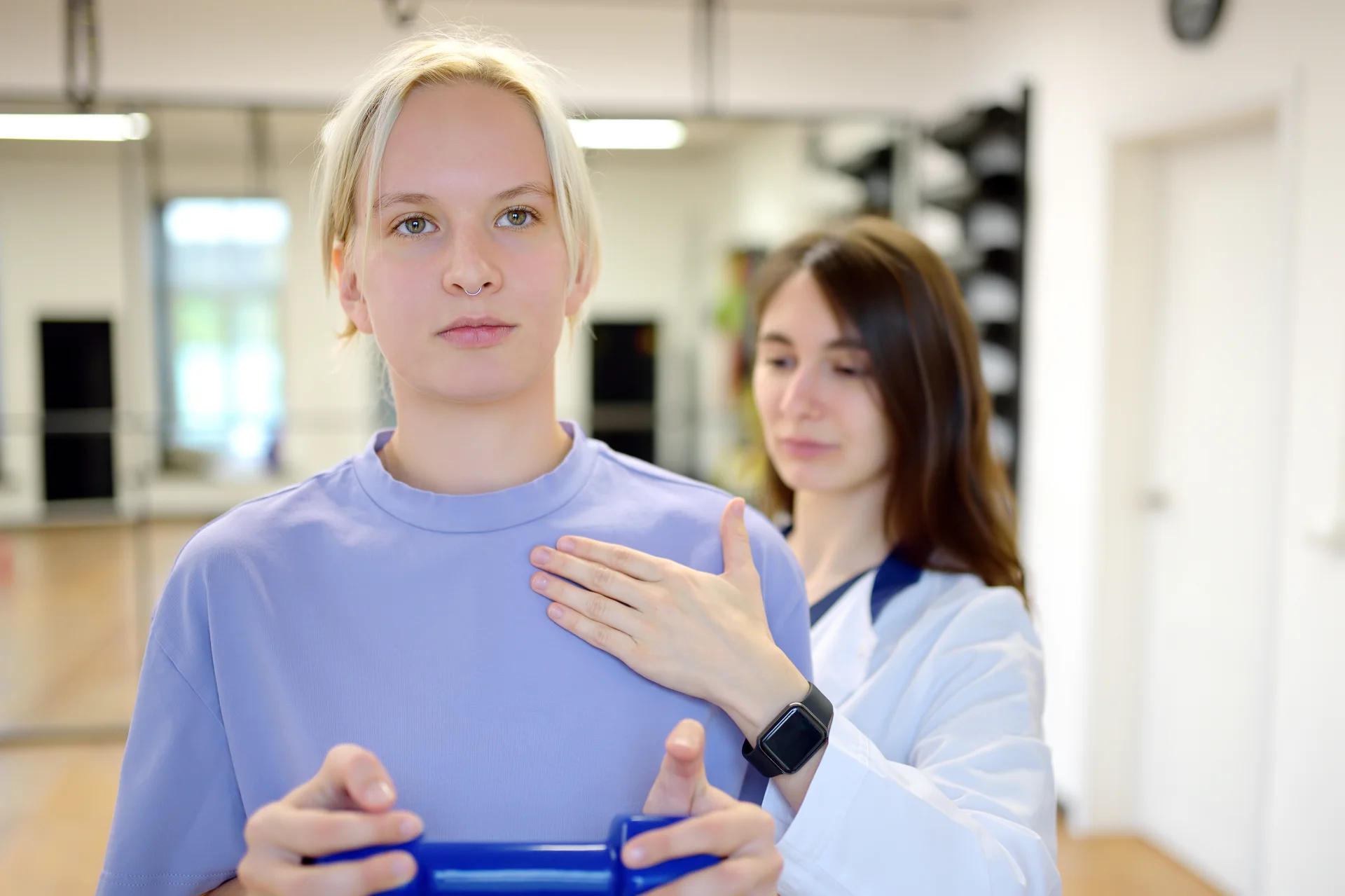
Teenage & Adolescent Physiotherapy in Waterlooville

Specialist Treatment for Growing Bodies and Active Young People

Teenagers and adolescents are not simply small adults. Their bodies are in a constant state of flux—growth plates are still open, bones often grow faster than soft tissues can adapt, and training loads can increase dramatically as young people begin to specialise in their chosen sports. These factors create a unique set of growth-related injuries that require specific clinical knowledge to manage safely and effectively.

At The Physiotherapy Centre, we provide specialist adolescent care led by Jeannette Small, a Chartered Physiotherapist with a wealth of experience in treating young people aged roughly 10 to 18. Whether it’s a sudden sports injury or a persistent ache that has appeared during a growth spurt, Jeannette tailors every treatment to the young person’s stage of physical development and their specific sporting goals.

Parents across Waterlooville, Widley, Purbrook, and the surrounding areas bring their teenagers to us because they want more than just ‘rest and painkillers.’ They want an accurate diagnosis, a clear recovery plan, and the confidence that their child is training in a way that protects their long-term health.
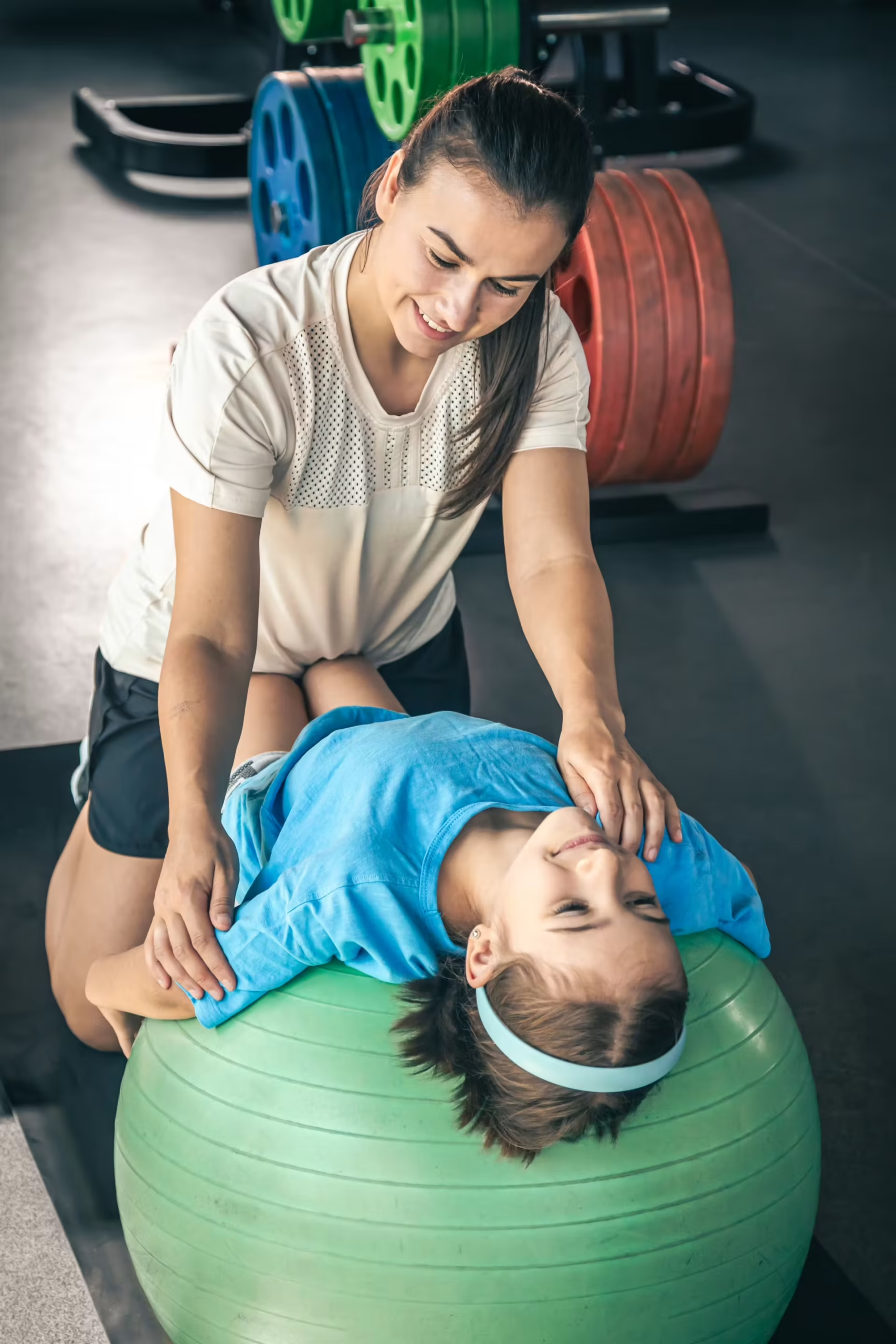
Teenage Adolescent Physio scaled

Conditions We Treat

These growth-related conditions can be confusing for both parents and teenagers, often being dismissed as “just growing pains” when they actually require a strategic approach to loading.

Here is the breakdown of the most common adolescent conditions we treat at The Physiotherapy Centre, with Jeannette’s specialist focus:

Osgood-Schlatter Disease
One of the most frequent causes of knee pain in active teenagers. It occurs when the growth plate at the top of the shin bone becomes irritated by the repeated pull of the quadriceps tendon during growth spurts. We focus on load management—finding the sweet spot of activity that allows healing without stopping sport entirely—alongside targeted strengthening.
Sever’s Disease
The heel’s version of Osgood-Schlatter—an irritation of the growth plate at the back of the heel causing significant pain during and after activity. Treatment involves calf flexibility, activity modification, and a graduated plan to get them back to full speed on the pitch or court.
Jumper’s Knee (Patellar Tendinopathy)
Pain located just below the kneecap, common in basketball and volleyball. It’s vital to distinguish this from a growth plate problem as the rehab approach is different. We use a progressive tendon loading programme to build resilience in the tissue.
Shin Splints (Medial Tibial Stress Syndrome)
Often triggered by a sudden increase in training volume, causing pain along the inside of the shin. In younger patients, we must be careful to rule out stress fractures. Our approach includes running gait analysis and strengthening the lower leg and foot muscles to better handle the impact.
Back Pain in Adolescents
Back pain in teenagers requires a high level of clinical suspicion to rule out conditions like Spondylolysis (a stress fracture in the spine) or Scheuermann’s Disease. Jeannette performs a thorough examination to ensure the spine is developing correctly and will advise if further investigations such as imaging are necessary.

How We Treat: Our Approach

Age-Appropriate Assessment

A teenager’s first appointment is far more than a standard physical check. Jeannette conducts a comprehensive assessment that specifically considers their stage of skeletal growth and hormonal development. We discuss their symptoms, but also their athletic load—their current sport and training schedule, school PE, and any previous injuries. The physical examination looks at joint flexibility, muscle strength, and movement patterns. Jeannette uses clinical tests specifically designed for adolescent conditions—such as palpation of the growth plates and apophyseal stress tests—to reach an accurate diagnosis that distinguishes between simple muscle strain and growth-plate irritation.
For the majority of adolescent conditions, the cure isn’t total rest—it’s getting the balance right between activity and recovery. Complete rest is rarely the answer and can often be counterproductive for a young athlete’s morale and fitness. Jeannette acts as a bridge between the clinical world and the sporting world, working with the young person and their parents, coaches, or PE teachers to dial the training load up or down. The goal is to keep them moving so symptoms settle without unnecessary time on the sidelines.
Once the initial pain is under control, we move into the build phase. We introduce a structured rehabilitation programme designed to correct flexibility deficits (where bones have outgrown muscles) and strengthen the muscles around the affected area to better support the growing joints. Because teenagers change so rapidly, this isn’t a static programme. Jeannette adjusts the exercises as the young person continues to develop, ensuring they aren’t just fixed for now, but are resilient for their entire sporting future.
Teenage

What to Expect at Your First Appointment

The first appointment lasts 45 to 60 minutes, providing ample time to be thorough without making the young person feel rushed. We believe that for rehabilitation to be successful, the teenager needs to understand their own body, so Jeannette explains the diagnosis in clear, straightforward terms to both the young person and the accompanying parent or guardian.

A few practicalities for your visit:

Pricing and Appointments

  • Initial Assessment £79 (45 minutes) or £89 (60 minutes)
  • Follow-Up Session £72 (30 minutes)
We are recognised providers for Bupa, AXA PPP, Aviva, WPA, and Cigna.

Conveniently Located in Waterlooville

Frequently Asked Questions

Do teenagers need a GP referral to see a physiotherapist?

No. Parents can book directly. If the problem has already been investigated by a GP or consultant, it is helpful to bring any letters or scan results.
Growing pains typically occur at night, affect both legs, and are not linked to a specific activity. Growth-related injuries such as Osgood-Schlatter or Sever’s disease cause pain during or after specific activities and are localised to a particular area. A physiotherapy assessment can distinguish between the two and advise accordingly.
Rarely. In most cases, activity can be modified rather than stopped entirely. This might mean reducing training frequency, avoiding certain drills, or switching to lower-impact activities temporarily. The aim is to keep your child as active as possible while allowing the condition to settle.
Symptoms typically resolve once the growth plate closes, which can take 12 to 24 months. However, physiotherapy can significantly reduce symptoms during this period, allowing the young person to stay active and manage their condition effectively. It does not mean they need to stop sport for two years.
Most adolescent back pain is musculoskeletal and responds well to physiotherapy. However, certain presentations—particularly back pain in a young gymnast, cricketer, or athlete who extends their spine repeatedly—may indicate a spondylolysis (stress fracture). Jeannette is trained to identify these presentations and will refer for imaging if clinically indicated.
Either is fine. Physiotherapists are qualified to assess musculoskeletal conditions without a GP referral. If the assessment suggests something that requires medical investigation—such as a stress fracture or inflammatory condition—Jeannette will advise you on the appropriate next step.
Yes. Treatment is specifically adapted for developing bodies. Jeannette avoids techniques that could affect growth plates and tailors exercises to your teenager’s stage of physical development. The approach is cautious and age-appropriate throughout.
Yes, with your consent. This can be useful for managing expectations around PE lessons, training, and match play while your teenager is recovering. Jeannette can provide written advice for coaches or teachers if needed.
This depends on the condition. Growth-related problems like Osgood-Schlatter may require periodic check-ins over several months as the condition is managed alongside ongoing activity. Acute injuries may resolve in three to six sessions. A realistic plan is discussed at the first appointment.
Yes. We are recognised by Bupa, AXA PPP, Aviva, WPA, and Cigna. Contact your insurer for an authorisation number before the first appointment.
Team

Meet the Team Supporting Your Recovery