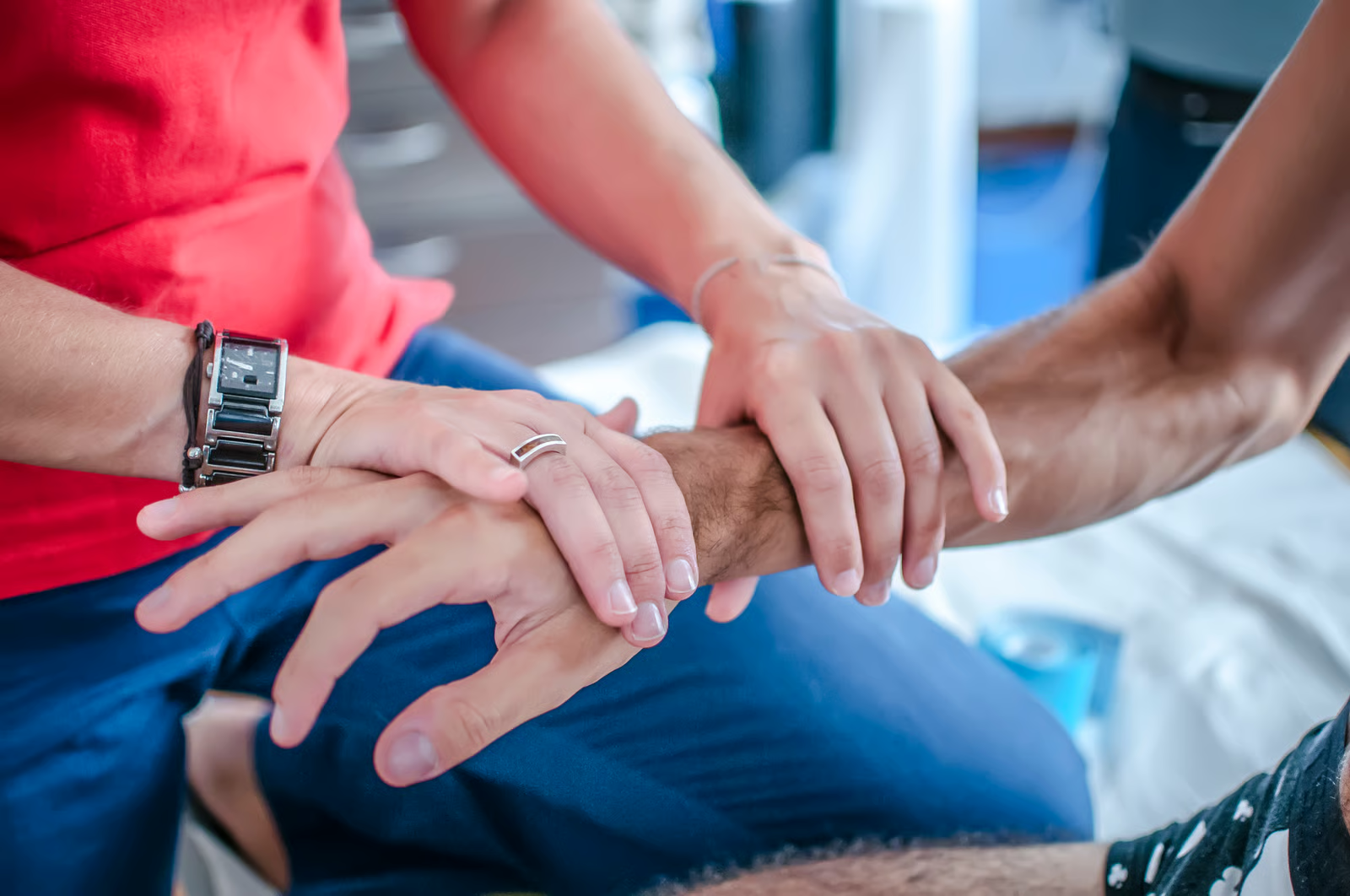
Neurological Physiotherapy in Waterlooville

Regain Movement and Independence After Neurological Injury or Diagnosis

A neurological condition changes the fundamental way your brain communicates with your body. Whether you are recovering from a stroke, living with Multiple Sclerosis (MS), or adjusting to a diagnosis of Parkinson’s disease, neurological physiotherapy is about rebuilding those connections. Our goal is to help you regain strength, improve your movement patterns, and—most importantly—reclaim as much of your independence as possible.

At The Physiotherapy Centre, we provide specialist neuro care led by Gemma Brown, a Chartered Physiotherapist with focused expertise in neurological rehabilitation. We understand that for many of our neuro patients, getting to a clinic can be a challenge. That’s why Gemma provides treatment both at our Waterlooville clinic and via home visits across Petersfield, Havant, and the surrounding areas.

We know that neurological rehabilitation isn’t a ‘quick fix’—it’s a journey that requires consistent, skilled input over time. Gemma works closely with you to set realistic, meaningful goals, building a programme that fits your life, your current abilities, and your personal priorities.

Neurological scaled

Conditions We Treat

Our neuro physiotherapy service provides assessment and treatment for:
Stroke
Rehabilitation to improve mobility, balance, arm function, and daily activities following a stroke. Treatment can begin at any stage, whether you are weeks or years post-stroke. Research consistently shows that the brain retains the capacity to form new neural pathways (neuroplasticity), and physiotherapy provides the structured, repetitive practice needed to take advantage of this.
Traumatic Brain Injury
Rehabilitation focused on restoring physical function, balance, and coordination following a head injury. The programme is adapted as your recovery progresses.
Spinal Cord Injury
Physiotherapy to maximise your movement and function within the parameters of your injury. Treatment may include strengthening, balance work, gait retraining, and equipment advice.
Multiple Sclerosis (MS)
Ongoing physiotherapy to manage symptoms such as fatigue, weakness, spasticity, and balance problems. Treatment is adjusted to account for fluctuations in your condition.
Parkinson’s Disease
Exercise-based rehabilitation to maintain mobility, reduce stiffness, and improve balance. Programmes are designed around current evidence, including the benefits of high-intensity exercise for slowing symptom progression.

How We Treat: Our Approach

Specialist Neurological Assessment

Your first session is a thorough investigation into how your nervous system is currently managing movement. Gemma carries out a detailed assessment of your balance, muscle tone, coordination, sensation, and functional abilities. To ensure we are making real, measurable gains, we use standardised outcome measures—such as the Berg Balance Scale, the Timed Up and Go (TUG) test, or the Action Research Arm Test. These provide a clear baseline, allowing us to track your progress objectively and adjust your treatment as you improve.
Neurological physiotherapy is built on a simple but powerful principle: the brain learns best when you practise the actual movements you want to master. We call this task-specific practice. Rather than just doing isolated exercises, our treatment sessions focus on real-world functional tasks—such as standing up from a chair, walking, reaching for objects, or climbing stairs. We break these movements down into manageable parts and practise them in a structured, progressive way to help your body relearn the most efficient way to move.
Muscle weakness and impaired balance are common across most neurological conditions, and they significantly increase the risk of falls and a loss of confidence. Your programme will include targeted strengthening exercises and balance training, systematically progressed as your stability improves. Depending on your needs, we use specialised equipment in our sessions—such as parallel bars, balance boards, or resistance bands—to provide the right level of support and challenge as you get stronger.
E101NM95

What to Expect at Your First Appointment

A neurological assessment is naturally more complex, so your initial appointment at The Physiotherapy Centre lasts 60 minutes. We start by discussing your diagnosis, your medical history, and any current medications you are taking. Most importantly, we want to hear about your personal goals—whether that’s walking to the end of the garden, improving your balance, or being able to use your arm more effectively.
The physical part of the assessment is thorough. Gemma will look at how you move, your balance, muscle strength, tone (stiffness or floppiness), and your overall coordination.

Preparing for your visit:

Home Visits

We understand that for some patients, the journey to our Waterlooville clinic isn’t practical. If you are unable to travel to us, we can arrange a home visit across Petersfield, Havant, and the surrounding areas, allowing you to receive specialist neuro-physiotherapy in the environment where you feel most comfortable.

Pricing and Appointments

  • Initial Assessment (at the Centre) £99 (60 minutes)
  • Follow-Up Session (at the Centre) £72 (30 min) or £81 (45 min)
  • Initial Assessment (at Home) £110 (60 minutes)
  • Follow-Up (at Home) £93 (45 minutes) or £114 (60 minutes)

Conveniently Located in Waterlooville

Frequently Asked Questions

Do I need a referral for neuro physiotherapy?

No. You can self-refer by contacting the clinic directly. However, if you are being seen by a neurologist or rehabilitation consultant, it can be helpful to share their reports with your physiotherapist.
As early as possible. Most stroke rehabilitation begins in hospital, but community-based neuro physiotherapy can continue and build on this progress. It is also never too late to start—improvements can be made months or even years after a stroke, particularly with consistent, targeted rehabilitation.
Yes. NICE guidelines recommend exercise and physiotherapy as part of the management of Parkinson’s disease. Physiotherapy helps maintain mobility, reduce rigidity, improve balance, and reduce fall risk. There is growing evidence that high-intensity exercise may also help slow symptom progression.
Yes. Home visits are available across Waterlooville, Petersfield, Havant, and surrounding areas. This is particularly useful for patients who have mobility difficulties, rely on carers, or find travelling to the clinic challenging.
This depends on your condition and goals. Many neuro patients benefit from weekly sessions initially, reducing in frequency as they become more independent with their home exercise programme. Gemma will discuss a realistic schedule at your first appointment.
Neuro physiotherapy requires specialist training in how the nervous system controls movement. Treatment approaches are different—focusing on neuroplasticity, task-specific practice, and the management of symptoms like spasticity and fatigue that are specific to neurological conditions. A general physiotherapist may not have this specialist knowledge.
Yes. Fatigue is one of the most common and disabling symptoms of MS. Your physiotherapist can help with fatigue management strategies, energy conservation techniques, and an exercise programme designed to improve your stamina without triggering excessive fatigue.
Possibly. Gemma may recommend simple equipment such as resistance bands, a balance pad, or specific aids to support your exercises at home. She will discuss this with you and advise on what would be most useful for your situation.
Realistic expectations are discussed at your first appointment. Neurological rehabilitation often involves gradual, incremental progress—small improvements in balance, strength, or function that accumulate over time into meaningful changes in your daily life.
If you experience sudden weakness on one side of your body, facial drooping, slurred speech, sudden severe headache, or loss of vision, call 999 immediately. These may be signs of a stroke or other neurological emergency. Neuro physiotherapy is for the ongoing rehabilitation of diagnosed conditions, not acute emergencies.
Team

Meet the Team Supporting Your Recovery