
Skilled Manual Therapy to Reduce Pain and Restore Movement
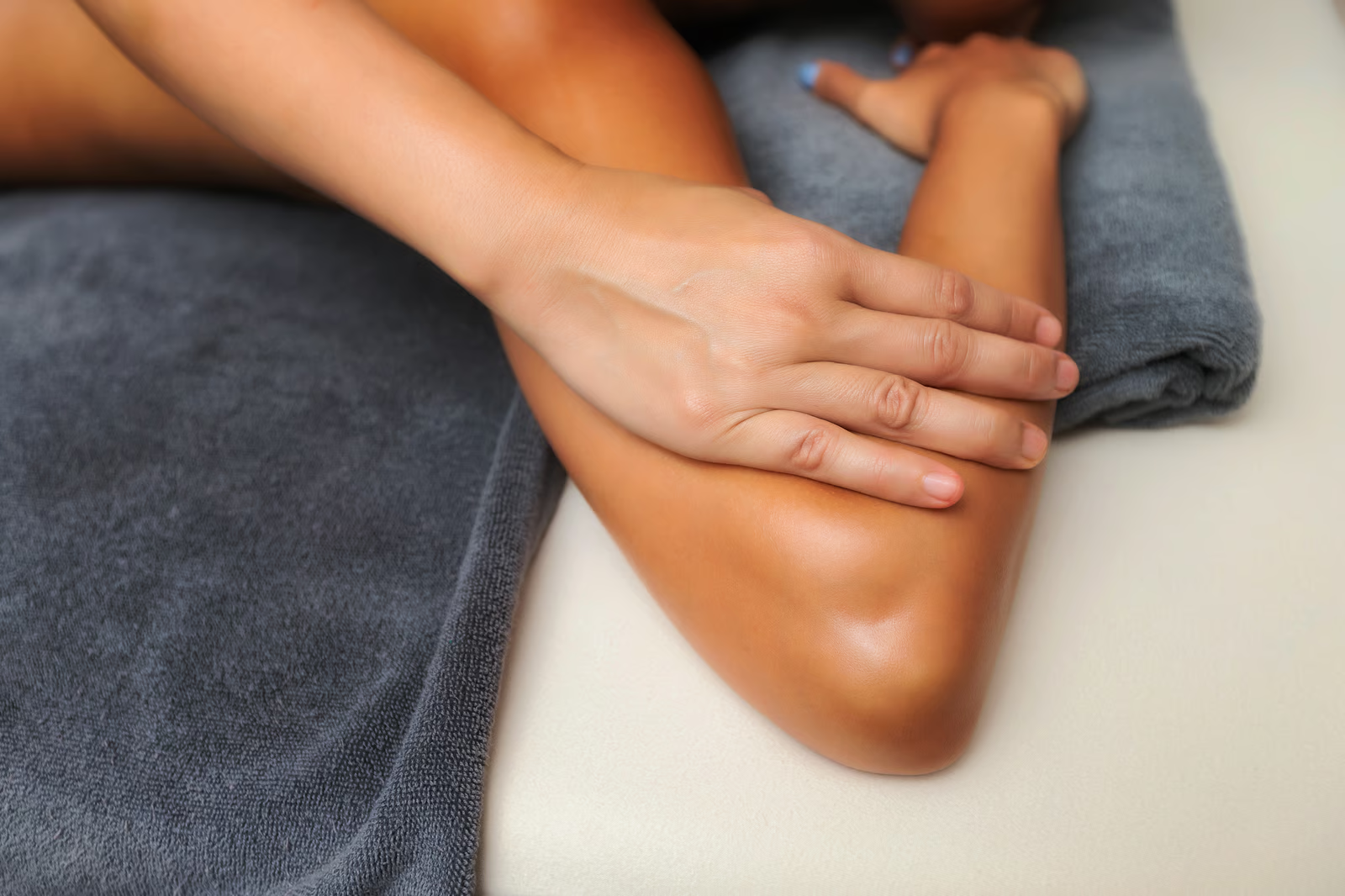
Manual therapy is one of the most effective tools a physiotherapist has for reducing pain, improving joint mobility, and relaxing tense muscles. However, there is a significant difference between a generic rub-down and skilled clinical intervention.
At The Physiotherapy Centre, manual therapy is provided by experienced chartered physiotherapists and sports therapists who use it as a targeted tool within a comprehensive treatment plan. We don’t just treat where it hurts; we use hands-on techniques to address the specific joints, nerves, and soft tissues contributing to your problem.
Patients from Waterlooville, Widley, Purbrook, and Cosham choose us because they want evidence-based, hands-on treatment that gets to the root of the issue.

What Manual Treatment Includes
Joint Mobilisation
Soft Tissue Massage and Myofascial Release
Muscle Energy Techniques (METs)
Neural Mobilisation
Trigger Point Therapy
How We Use Manual Therapy
As Part of Your Treatment Plan
Manual therapy is never used in isolation here. It is seamlessly integrated into a broader treatment plan that includes bespoke exercise prescription, lifestyle education, and, where beneficial, advanced technologies like Shockwave Therapy or EMTT.
- The Strategy: We use hands on techniques to dial down your pain and open up your range of movement. This creates a vital window of opportunity, allowing you to perform your rehabilitation exercises with greater ease and better form.
Targeted to Your Assessment Findings
- If your joints are stiff: We focus on joint mobilisations or manipulations to restore gliding.
- If muscle tension is the barrier: We use soft tissue techniques to reduce guarding and improve circulation.
- If nerves are sensitive: We incorporate neural mobilisations (gentle "sliding" of the nerves) to reduce irritation. Your treatment is adapted at every visit to match exactly what your body needs that day.
Progressed and Adapted Over Time
- Early Stage: When pain is high, hands on treatment often takes up a larger portion of your session to provide relief.
- Middle Stage: As pain settles, we strike a balance between manual therapy and introducing corrective exercises in our gym space.
- Final Stage: The focus shifts primarily to exercise, strength building, and self management.
What to Expect at Your First Appointment
Your Manual Therapy Appointment: What to Expect
The session is divided into three key parts:
- Clinical Assessment: We start with a detailed conversation about your symptoms, medical history, and goals. This is followed by physical tests to assess your joint range, muscle strength, and nerve function.
- Hands-On Treatment: Once a diagnosis is confirmed, we begin your first manual therapy treatment. Whether it is joint mobilisation, soft tissue work, or manipulation, we start addressing the physical barriers to your recovery immediately.
- The Home Plan: We conclude by prescribing a small number of specific exercises for you to do at home. These are designed to hold the improvements made during the hands on portion of your session.
Preparation for Treatment
- What to Wear: Please wear comfortable, loose clothing.
- For Spinal Problems (Neck & Back): A vest top or loose t-shirt is helpful so the clinician can see the movement of your spine and access the surrounding muscles.
- For Lower Limb Conditions (Hip, Knee, Ankle): Please bring a pair of shorts.
- Privacy: Your comfort and dignity are our priority. We have private treatment rooms and can provide towels for draping if necessary.
Why Choose a Manual Therapy Specialist?
Pricing and Appointments
-
Initial Assessment £79 (45 minutes) or £89 (60 minutes)
-
Follow-Up Session £72 (30 minutes)
Conveniently Located in Waterlooville
- The Physiotherapy Centre 96 London Road, Widley, Waterlooville, Hampshire, PO7 5AB
- Mon: 8.00–7.00 | Tue: 8.00–7.30 | Wed: 8.00–8.00 | Thu: 8.00–7.00 | Fri: 8.00–5.00 | Sat: 8.30–1.00
- We serve patients from Widley, Purbrook, Waterlooville, Cosham, Havant, and Petersfield. The clinic is on the old A3 / London Road, just north of Portsdown Hill, near the Hampshire Rose pub. The No. 8 bus (Bushy Mead) stops just up the road.