
Rehabilitation in Warm Water — Easier on Your Joints, Effective for Recovery
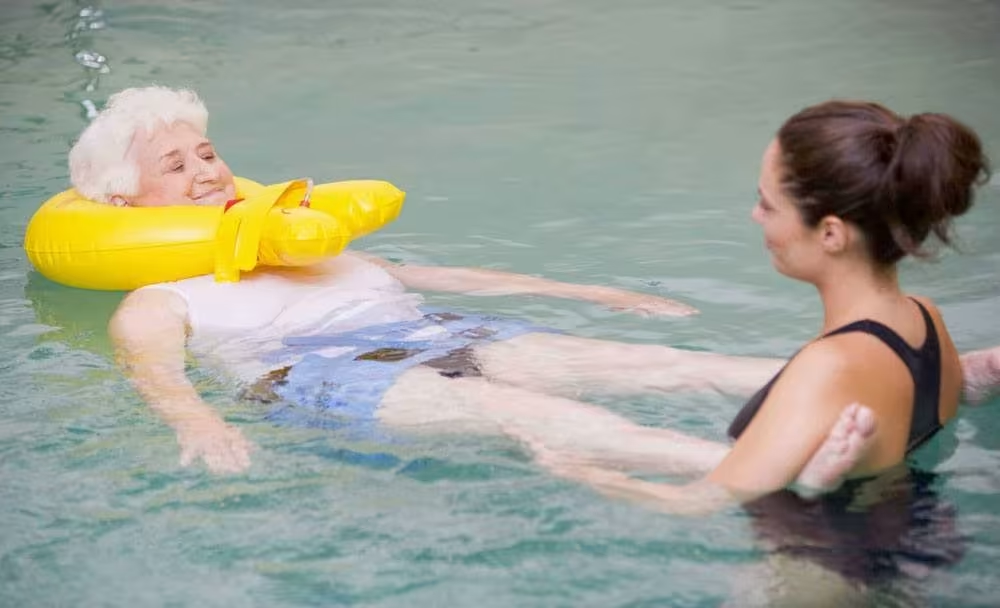
Hydrotherapy utilises the unique physical properties of warm water—buoyancy, resistance, and hydrostatic pressure—to make movement easier, reduce pain, and accelerate your recovery. For many patients, land-based exercise can feel painful, difficult, or even impossible. Hydrotherapy provides a safe, supported environment to begin strengthening, improving mobility, and rebuilding confidence.
At The Physiotherapy Centre, our hydrotherapy sessions are supervised by experienced clinicians who tailor every exercise to your specific injury and stage of recovery. This is not a group pool class; it is one-to-one physiotherapy or sports therapy delivered in warm water.
We welcome patients from Waterlooville, Portsmouth, Petersfield, Havant, and across Hampshire who are looking for a gentle yet highly effective way to bridge the gap back to full function on dry land.
Conditions We Treat
Post-Surgical Rehabilitation
Neurological Conditions
Hip Conditions
Knee Conditions
Back Conditions
How We Treat: Our Approach
The Hydrotherapy Pathway
Assessment & Treatment Planning
One-to-One Sessions in Warm Water
- Therapeutic Warmth: The water is maintained at a specific therapeutic temperature (33–35°C). This warmth is vital for relaxing hypertonic (tight) muscles, easing joint stiffness, and improving circulation.
- The Programme: Your session will include a bespoke combination of mobility work, targeted strengthening, balance tasks, and gait retraining (learning to walk again with a normal pattern).
Progression to Land-Based Rehabilitation
Self-Supervised Sessions
What to Expect at Your First Hydrotherapy Session
Preparing for Your Hydrotherapy Session
The Initial Land-Based Assessment
- Confirm Suitability: Ensure that hydrotherapy is the most effective and safe treatment for your specific condition.
- Safety Screening: Check for any contraindications, such as certain heart conditions, respiratory issues, or uncontrolled epilepsy.
- Baseline Metrics: Measure your current strength and range of motion so we can track how much the water is helping you progress.
What to Bring & What to Expect on Your First Session
- Kit List: Please bring your swimming costume, a towel, and a padlock for the lockers.
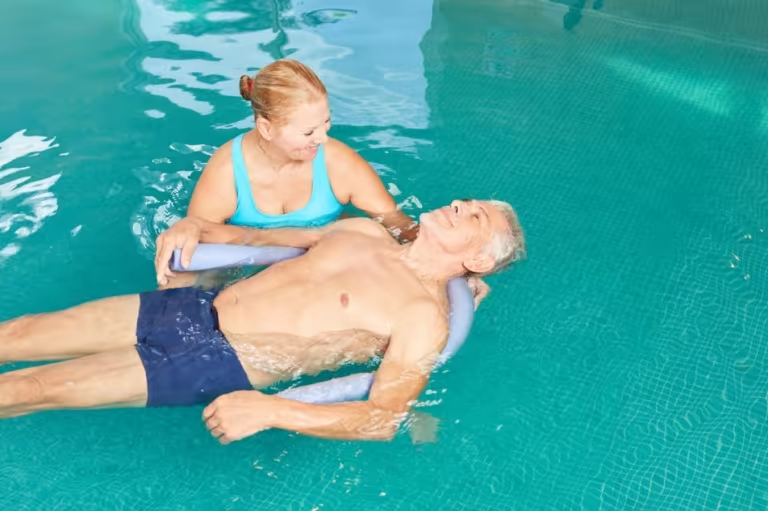
- Poolside Meet: Your clinician will meet you poolside, explain the goals for the day, and guide you through every movement.
- Duration: You will have 30 or 45 minutes of dedicated time in the water.
- No Swimming Required: You do not need to be a strong swimmer. The pool is designed specifically for therapeutic use; it is heated, and you will be able to stand comfortably in your depth throughout the session.
Important Health & Safety Notes
- Skin & Wounds: If you have any open wounds, skin conditions, or active infections, please inform the clinic before your session. There may be temporary restrictions on pool use until these have cleared.
- Medical Changes: If there are any changes to your medication or general health between sessions, please let your clinician know.
Pricing and Appointments
-
Initial Assessment (land-based) £89 (60 minutes)
-
Supervised Follow-Up £96 (30 min) or £107 (45 min)
-
Self-Supervised Sessions £147 (10 × 30 min) or £215 (10 × 45 min)
Conveniently Located in Waterlooville
- The Physiotherapy Centre 96 London Road, Widley, Waterlooville, Hampshire, PO7 5AB
- Mon: 8.00–7.00 | Tue: 8.00–7.30 | Wed: 8.00–8.00 | Thu: 8.00–7.00 | Fri: 8.00–5.00 | Sat: 8.30–1.00
- We serve patients from Widley, Purbrook, Waterlooville, Cosham, Havant, Portsmouth, and Petersfield. The clinic is on the old A3 / London Road, just north of Portsdown Hill, near the Hampshire Rose pub. The No. 8 bus (Bushy Mead) stops just up the road.