
Specialist Rehabilitation to Help You Move Better and Live More Independently
Understanding Neurological Rehabilitation
Neurological conditions affect the way your brain and nervous system communicate with the rest of your body. Whether the cause is a sudden event like a stroke, a progressive condition such as Parkinson’s disease or Multiple Sclerosis, or an injury to the brain or spinal cord, the result is often a disruption to movement, coordination, and strength.
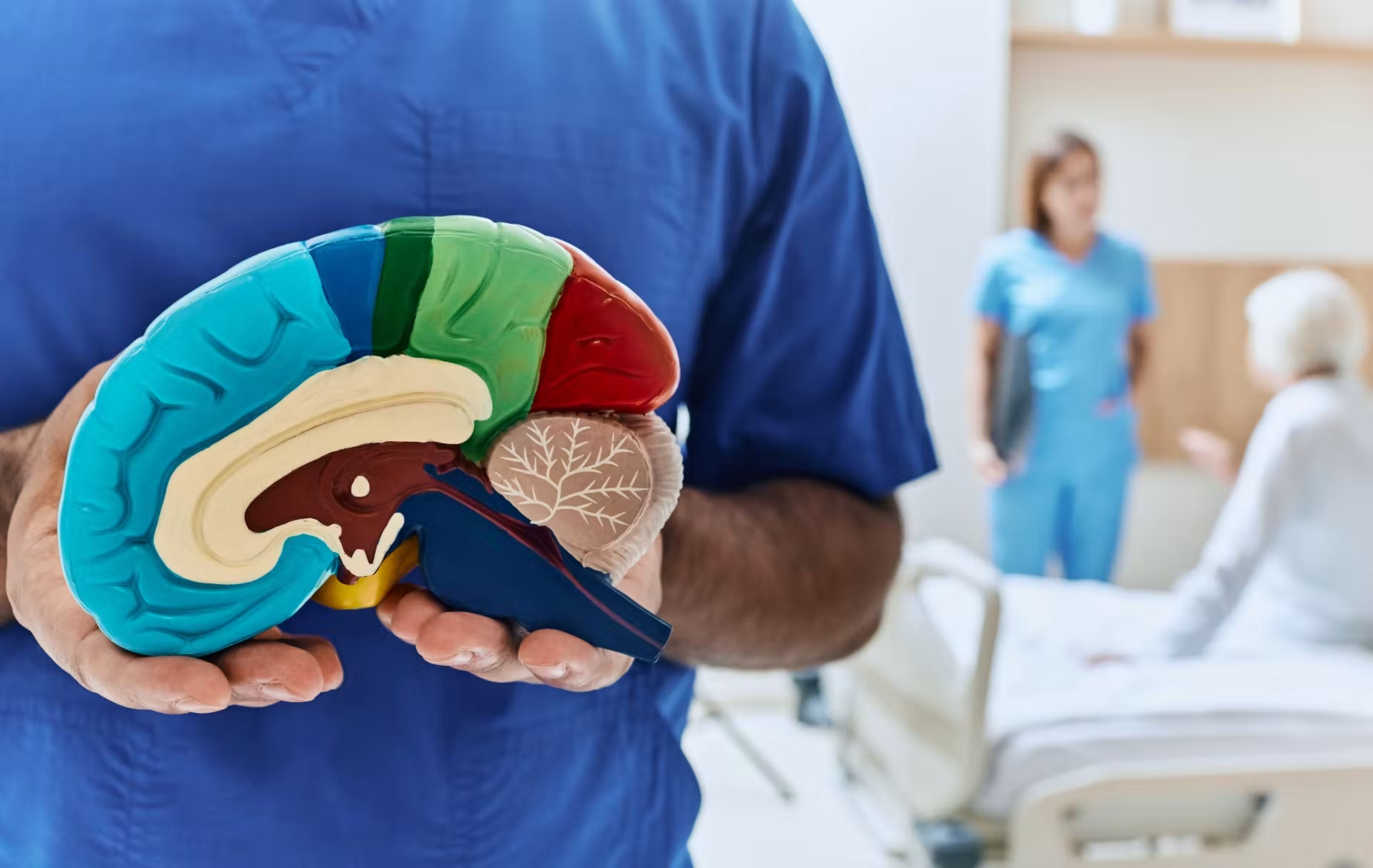
Neurological physiotherapy is designed to harness neuroplasticity—the remarkable ability of the brain to form new neural connections and adapt to injury. This is not a passive process; it requires structured, repetitive, and task-specific practice. By stimulating the nervous system through targeted movement, we help “rewire” the pathways that allow you to regain function and carry out everyday tasks with greater ease.
Specialist Neuro Physiotherapy in Waterlooville
At The Physiotherapy Centre, neurological rehabilitation is led by Gemma Brown, a chartered physiotherapist with focused expertise in this specialist field. Gemma understands the complexities of the nervous system and provides a compassionate, goal-oriented approach to recovery.
Because we know that travel can be a barrier for those with neurological symptoms, we offer treatment both at our Waterlooville clinic and through Home Visits across Widley, Purbrook, Cosham and Havant. Whether you are in the early stages of recovery after a hospital stay or managing a long-term condition, Gemma provides the specialist support needed to maximize your physical potential.

Understanding Neurological Conditions
Stroke
Stroke rehabilitation can begin early and continue for months or years. The brain retains the capacity to reorganise and form new pathways long after the initial event, which means meaningful improvement is possible even in the chronic phase. NICE guidelines recommend that stroke survivors have access to specialist rehabilitation for as long as they are making measurable progress.
Traumatic Brain Injury / Head Injury
Traumatic brain injury (TBI) results from a blow or jolt to the head and can range from mild concussion to severe injury with prolonged loss of consciousness. Physical effects may include weakness, balance problems, coordination difficulties, dizziness, and fatigue. The pattern of recovery is individual and depends on the location and extent of the injury.
Rehabilitation focuses on restoring physical function, improving balance and coordination, and supporting a graded return to daily activities, work, and sport. Progress can continue for months and years after the initial injury.
Spinal Cord Injury
Multiple Sclerosis (MS)
Parkinson's Disease
Red Flags — When to Seek Emergency Help
How We Treat Neurological Conditions
Specialist Neurological Assessment
Your recovery begins with a detailed baseline assessment. Gemma evaluates the specific ways your nervous system is communicating with your body, focusing on movement patterns, muscle tone, coordination, and sensation.
To track your progress objectively, we use clinical outcome measures such as the Berg Balance Scale, the 10-Metre Walk Test, or the Action Research Arm Test. This data-driven approach allows us to see exactly how you are improving over time. Beyond the physical, we consider your personal goals, your home environment, and the specific factors currently limiting your independence.
Task-Specific Rehabilitation
The core of our approach is task-specific practice. Neuroplasticity is most effectively triggered when you practice the actual movements you want to master. We don’t just perform isolated exercises; we practice functional tasks such as:
- Transfers: Safely moving from bed to chair or chair to standing.
- Upper Limb Function: Reaching, grasping, and manipulating objects.
- Mobility: Walking indoors and outdoors, including navigating uneven surfaces and stairs.
Strength and Balance Training
Spasticity and Tone Management
For conditions involving increased muscle tone or spasticity—common in Stroke, MS, and Spinal Cord Injury—we implement specific management strategies. This includes specialized stretching programmes to maintain joint range and positioning advice to help “quieten” overactive muscles. Gemma focuses on functional movement that works with your body’s altered tone rather than against it, reducing discomfort and improving efficiency.
Home Exercise & Carer Support
Neurological rehabilitation is a continuous process. Gemma prescribes a home programme tailored to your specific abilities and environment, provided with clear instructions. If you have family members or carers involved in your daily support, Gemma can provide direct guidance and demonstrations on how they can assist you with your exercises safely and effectively.

What to Expect at Your First Appointment
At The Physiotherapy Centre, we recognize that neurological recovery is a marathon, not a sprint. Your initial 60-minute consultation with Gemma is designed to establish a baseline and build a partnership based on clinical expertise and realistic hope.
Your First Appointment: What to Expect
Practicalities for your visit:
- Flexible Clinical Setting: Your assessment can take place in our Waterlooville clinic or as a home visit if that is more accessible for you.
- What to wear: Please wear comfortable clothing and the supportive footwear you typically use.
- Equipment: It is essential to have any walking aids, orthotics, or assistive equipment (such as splints or reaching tools) available for the assessment so Gemma can see how you use them in daily life.
- Clinical History: If you have hospital discharge summaries, consultant letters, or imaging reports (MRI or CT), please have these ready. They provide vital context for your neurological profile.
- Clear Communication: Gemma will explain her findings in straightforward terms, ensuring you and your family understand the why behind the rehabilitation plan.
Honesty in Recovery
Pricing and Appointments
-
Initial Assessment £99 (60 minutes)
-
Follow-Up Session £72 (30 minutes) or £81 (45 minutes)
-
Initial Assessment £110 (60 minutes)
-
Follow-Up Session £93 (45 minutes) or £114 (60 minutes)
Conveniently Located in Waterlooville
- The Physiotherapy Centre 96 London Road, Widley, Waterlooville, Hampshire, PO7 5AB
- Opening Hours: Mon: 8.00–7.00 | Tue: 8.00–7.30 | Wed: 8.00–8.00 | Thu: 8.00–7.00 | Fri: 8.00–5.00 | Sat: 8.30–1.00
- We serve patients from Widley, Purbrook, Waterlooville, Cosham, Havant, Petersfield, and Portsmouth. The clinic is on the old A3 / London Road, just north of Portsdown Hill, near the Hampshire Rose pub. The No. 8 bus (Bushy Mead) stops just up the road.
Frequently Asked Questions
Is it too late to start rehabilitation after a stroke?
No. While the most rapid recovery typically occurs in the first three to six months after a stroke, the brain retains neuroplasticity — the ability to form new connections — indefinitely. Meaningful improvements can be made months or even years after a stroke with the right rehabilitation programme. It is never too late to start.
How often should I have neuro physiotherapy sessions?
This depends on your condition, goals, and stage of recovery. Many patients benefit from one to two sessions per week initially, reducing in frequency as they become more independent with their home programme. Gemma will recommend a schedule at your first appointment based on your individual needs.
Can physiotherapy help with MS fatigue?
Yes. Fatigue is one of the most common and debilitating symptoms of MS, affecting up to 80% of people with the condition. Physiotherapy can help through energy conservation and pacing strategies, a carefully graded exercise programme (paradoxically, appropriate exercise reduces fatigue rather than worsening it), and advice on managing daily activities to minimise fatigue impact. Exercise is now recommended by the MS Society and NICE as a key strategy for managing MS-related fatigue.
Will I need physiotherapy forever?
Not necessarily. The goal is to equip you with the skills, exercises, and strategies to manage your condition as independently as possible. Many patients transition from regular sessions to self-management with periodic reviews. For progressive conditions like MS and Parkinson’s, intermittent blocks of physiotherapy may be beneficial as symptoms change over time.
Can hydrotherapy help with neurological conditions?
Yes. Hydrotherapy is particularly beneficial for neurological patients. The warmth reduces spasticity and muscle stiffness, the buoyancy supports body weight and makes movement easier, and the water provides resistance for gentle strengthening. Our hydrotherapy service is available on-site and can be integrated into your treatment plan.
What is the difference between neuro physio and general physio?
Neurological physiotherapy requires specialist postgraduate training in how the nervous system controls movement. The treatment approaches are specifically designed to promote neuroplasticity through task-specific practice, and to manage symptoms like spasticity and fatigue that are unique to neurological conditions. A general physiotherapist may not have this specialist knowledge.
Can physiotherapy slow down Parkinson's disease?
There is growing evidence that high-intensity exercise may slow the progression of motor symptoms in Parkinson’s disease. Physiotherapy also helps maintain mobility, reduce rigidity, improve balance, and reduce fall risk — all of which support better quality of life and independence as the condition progresses.
Are home visits available?
Yes. Gemma provides home visits across Waterlooville, Petersfield, Havant, and surrounding areas. This is particularly valuable for patients with mobility difficulties or those who find travelling to the clinic challenging.
Can you work with my neurologist or rehabilitation team?
Yes. Gemma can coordinate with your neurologist, GP, occupational therapist, speech therapist, and other members of your care team to ensure your rehabilitation is aligned and comprehensive. With your consent, she can provide reports and updates to your other clinicians.
How do I know if neuro physio is right for me?
If you have a neurological condition that affects your movement, balance, strength, or independence, neuro physio is likely to be beneficial. If you are unsure, contact the clinic to discuss your situation — Gemma can advise on whether her service is appropriate for your specific condition.