
Accelerate Healing for Stubborn Tendon and Musculoskeletal Conditions
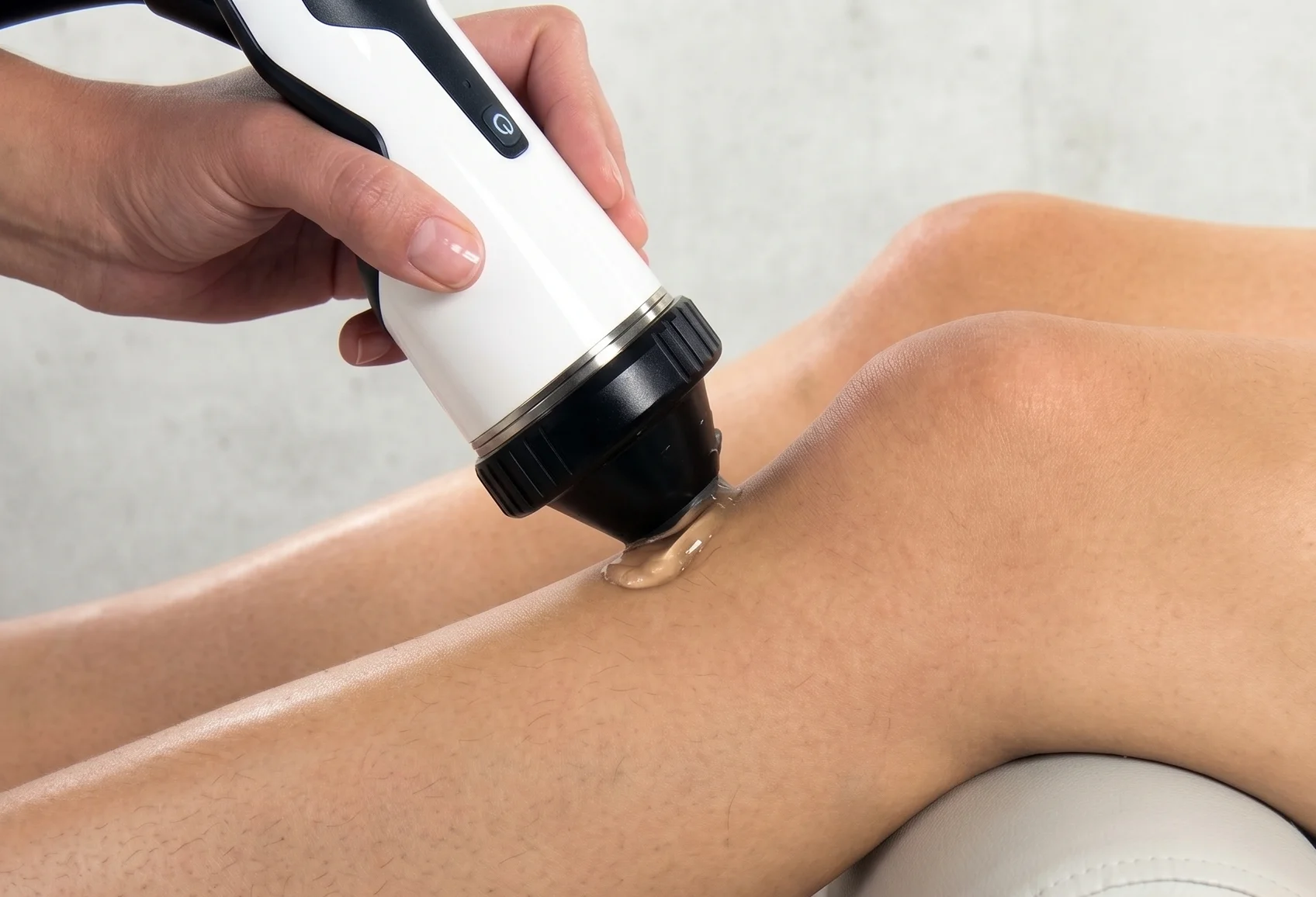
If you have a tendon or musculoskeletal problem that simply hasn’t responded to standard physiotherapy or rest, Extracorporeal Shockwave Therapy (ESWT) may be the missing piece of the puzzle. Shockwave uses targeted acoustic pressure waves to stimulate a healing response in damaged tissues, effectively re-starting the recovery process in chronic injuries.
It is one of the most researched non-invasive treatments available today and is recommended by NICE for several conditions, including plantar fasciitis and Achilles tendinopathy.
At The Physiotherapy Centre, we are one of the few clinics to offer both radial and focused shockwave therapy. This gives our clinicians the flexibility to select the most appropriate technology—or even combine them—depending on exactly where and what your injury is. Most importantly, we don’t use shockwave as a ‘magic wand’ on its own; our experienced team integrates it into a broader, structured rehabilitation plan to ensure the results are both effective and permanent.
Conditions We Treat
Achilles Tendinopathy
Plantar Fasciitis
Shin Splints (Medial Tibial Stress Syndrome)
Greater Trochanteric Pain Syndrome (GTPS)
Patellar Tendinopathy (Jumper’s Knee)
Tennis Elbow and Golfer’s Elbow
Frozen Shoulder and Shoulder Pain
Chronic Tendinopathy and Chronic Pain
Low Back Pain
Men’s Sexual Health
How We Treat: Our Approach
Assessment Before Treatment
Radial vs. Focused vs. Combined Shockwave
- Radial Shockwave: This disperses energy over a wider area. It is highly effective for superficial tendon conditions and "knots" (myofascial trigger points), and it is the most common form of ESWT used in physiotherap
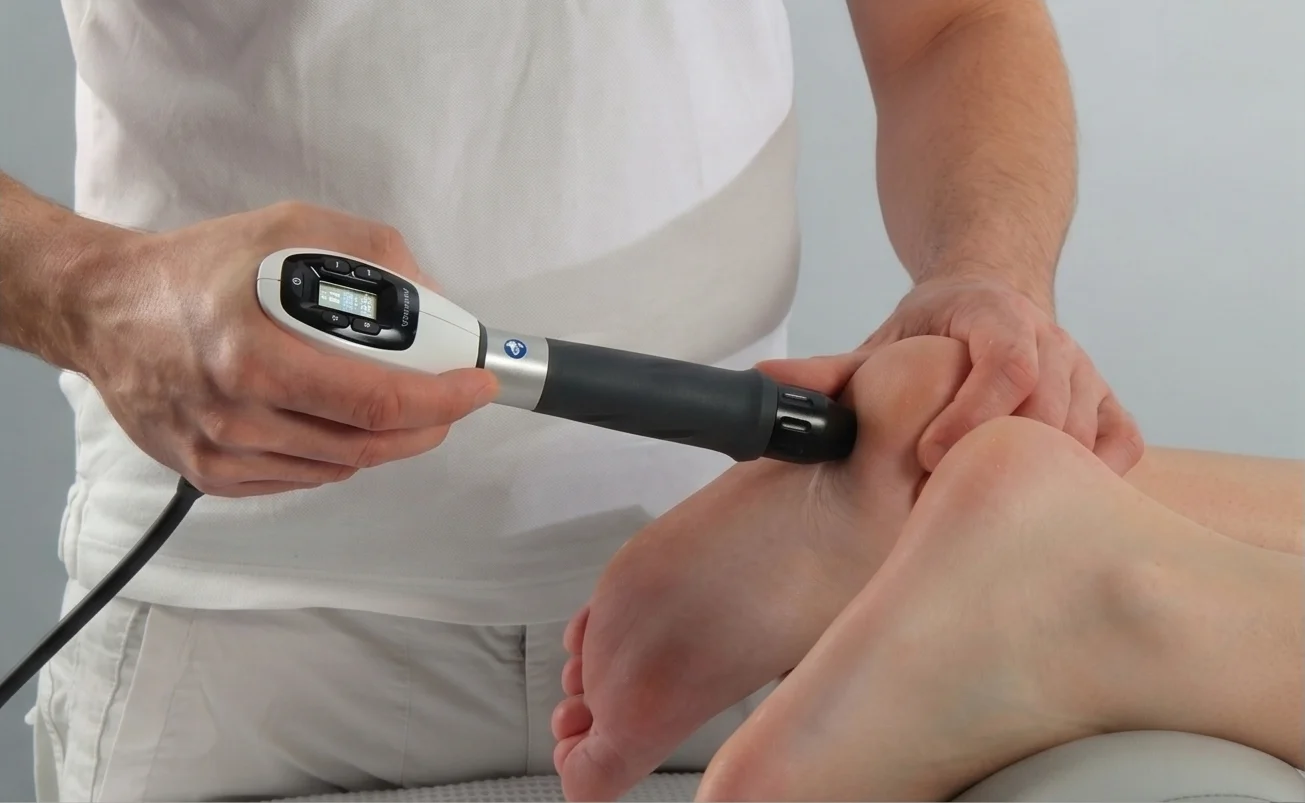
- Focused Shockwave: This delivers energy to a precise point at a specific depth. It is essential for treating deeper structures, breaking down calcifications, and managing conditions like non-union fractures.
- Combined Treatment: For complex conditions that affect tissue at multiple depths, we can use both radial and focused shockwave in the same session to provide the most comprehensive treatment possible.
Integrated Rehabilitation
The real “secret” to success with shockwave is what you do between sessions. The treatment is at its most effective when combined with a tailored exercise programme. Your clinician will prescribe specific “loading” exercises alongside your therapy to ensure the healing response we’ve triggered actually translates into stronger, more functional tissue.
What to expect: A typical course of treatment involves three to six sessions, usually spaced one to two weeks apart. This timeframe allows your body to respond to the treatment and begin the repair process.
What to Expect at Your First Appointment
A few things to keep in mind:
- How it feels: Most patients describe the sensation as uncomfortable but tolerable—similar to a tapping or pulsing feeling. Your clinician will always start at a lower level and adjust the intensity to your comfort level.
- After-effects: It is perfectly normal to feel some soreness or a dull ache in the treated area for 24 to 48 hours after your session. This is a sign that the treatment has triggered the desired healing response.
- What to wear: Please wear clothing that allows easy access to the area being treated (e.g., shorts for a foot or knee injury).
Pricing and Appointments
-
Initial Assessment (with first treatment) £89 (60 minutes)
-
Follow-Up — Radial Shockwave £99
-
Follow-Up — Focused Shockwave £141
-
Follow-Up — Combined (Radial + Focused) £167
Conveniently Located in Waterlooville
- The Physiotherapy Centre 96 London Road, Widley, Waterlooville, Hampshire, PO7 5AB
- Mon: 8.00–7.00 | Tue: 8.00–7.30 | Wed: 8.00–8.00 | Thu: 8.00–7.00 | Fri: 8.00–5.00 | Sat: 8.30–1.00
- We serve patients from Widley, Purbrook, Waterlooville, Cosham, Havant, and Petersfield. The clinic is on the old A3 / London Road, just north of Portsdown Hill, near the Hampshire Rose pub. The No. 8 bus (Bushy Mead) stops just up the road.