
Stop Dreading Those First Steps in the Morning
Specialist Heel Pain Care in Waterlooville
At The Physiotherapy Centre, plantar fasciitis is one of our most frequently treated conditions. We regularly support patients from Widley, Purbrook, Waterlooville, Cosham, Havant, and Petersfield—many of whom come to us after months of heel pain that has not responded to traditional “rest-and-wait” methods.
Our team moves beyond symptom management to build a more resilient foot. By combining expert manual therapy with a bespoke loading programme and advanced treatments like Shockwave Therapy, we provide a comprehensive pathway designed to get you back on your feet and moving without that signature morning sharp pain.

Understanding Plantar Fasciitis
What Causes Plantar Fasciitis?
Symptoms
When to Seek Further Investigation
How We Treat Plantar Fasciitis
Clinical Assessment
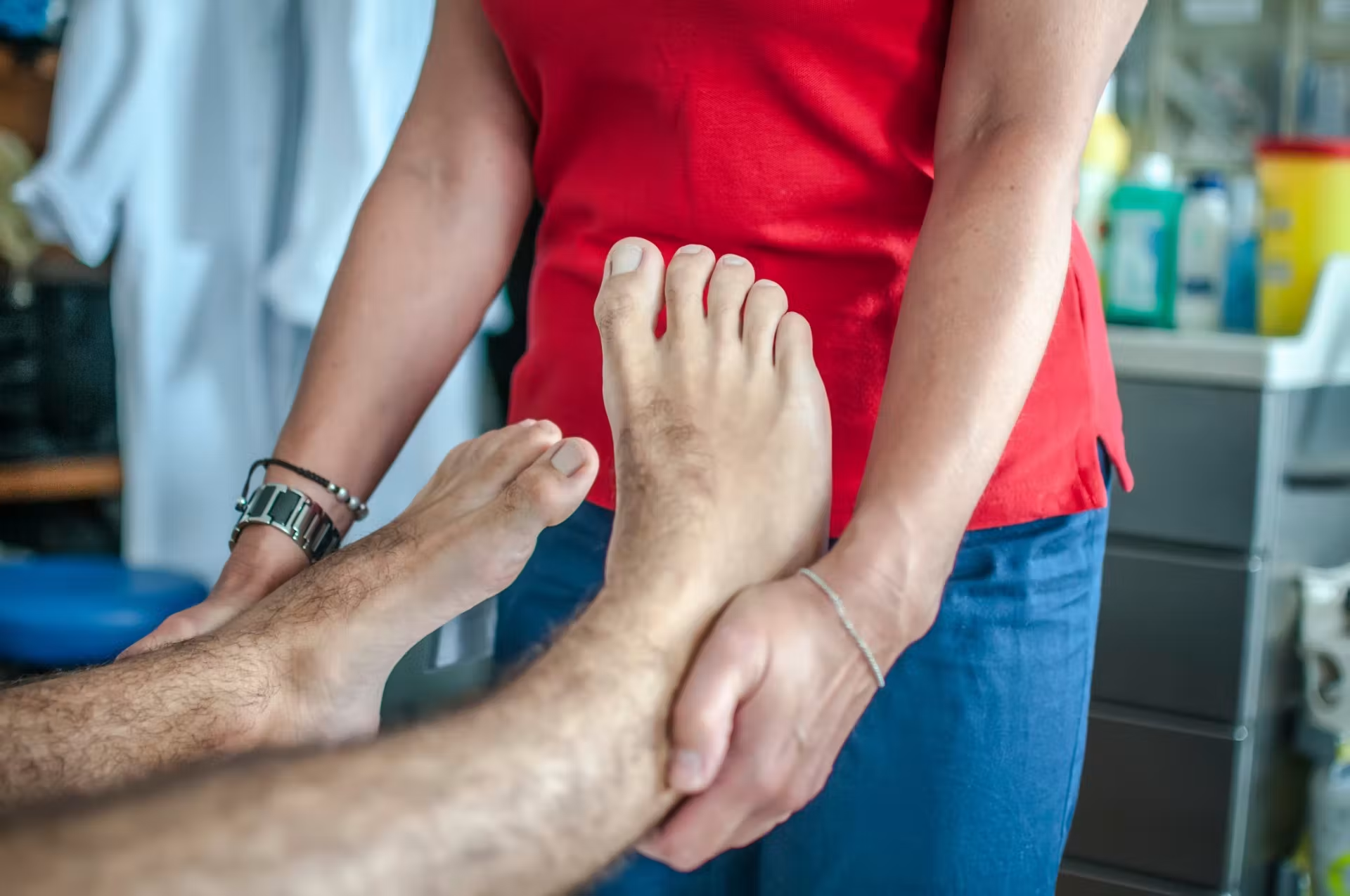
A lasting recovery begins with a pinpoint diagnosis. Your physiotherapist will carry out a thorough assessment that includes palpation of the plantar fascia insertion and its entire length to identify the specific site of irritation. We assess your ankle range of movement, calf strength, and foot posture, alongside a detailed gait analysis. Because foot pain often has “silent” contributors elsewhere, we also screen for factors like hip weakness or training errors. This comprehensive approach identifies not just the severity of the condition, but exactly what needs to change to prevent it from coming back.
Progressive Loading Programme
The most effective treatment for plantar fasciitis is a graded loading programme that targets both the fascia and the calf-Achilles complex. Modern research strongly supports the use of high-load strength training—including heavy, slow resistance calf raises with a towel roll under the toes—to stimulate tissue adaptation and reduce pain. We progress your programme from simple, low-load exercises through to functional and sport-specific rehabilitation, adjusting the intensity at every session based on your symptoms and progress.
Calf and Foot Strengthening
Weakness in the calf muscles and the tiny “intrinsic” muscles of the foot is almost universal in plantar fasciitis cases. Your programme will include targeted calf strengthening (focusing on both the gastrocnemius and soleus muscles), “short foot” exercises to support your arch, and specific ankle mobility work if your movement is restricted. By strengthening the “foundations” of your foot, we take the excessive strain off the plantar fascia itself.
Adjunct Treatments
For persistent heel pain, Shockwave Therapy (ESWT) is one of the most well-supported treatments available. It is recommended by NICE for plantar fasciitis and has been shown to significantly reduce pain in chronic cases. We also offer EMTT for deeper tissue engagement and diagnostic ultrasound to assess the thickness of the fascia or rule out other causes of heel pain. Hands-on manual therapy—including calf soft tissue release and ankle joint mobilisation—is often used to support your loading programme and keep you moving comfortably.
Orthotics and Footwear Advice
We take a pragmatic approach to what you wear on your feet. Your physiotherapist may recommend the temporary use of a heel cup, taping, or off-the-shelf insoles to settle your symptoms while your loading programme takes effect. Custom orthotics aren’t always necessary, and we only recommend them if a specific biomechanical issue warrants it. We also provide clear advice on footwear—specifically regarding “drop” and cushioning—tailored to your individual foot shape and activity levels.

What to Expect at Your First Appointment
Your First Appointment: What to Expect
Practicalities for your visit:
- What to wear: Please wear a pair of shorts or bring them with you. Your physiotherapist will need to clearly observe your foot, ankle, and calf throughout the examination.
- Footwear: Please bring your everyday footwear as well as any sports shoes you use. Seeing the wear patterns and support levels of your shoes gives us vital clues about how your foot is being loaded.
- Assessment Activities: We don’t just look at the foot while you’re sitting down; your therapist will observe how you walk and carry out specific tests to see how your fascia responds to movement.
- Immediate Progress: You won’t leave empty-handed. You will leave with a clear diagnosis, an initial loading programme to start rebuilding your foot’s strength, and expert advice on how to manage your symptoms day-to-day.
Honesty in Recovery
We believe in realistic expectations. While many patients feel a significant reduction in heel pain within the first few sessions—especially with the help of adjunct treatments—remodelling the plantar fascia takes time. Your physiotherapist will provide an honest assessment of your prognosis, typically outlining a six to twelve-week roadmap for significant, lasting improvement.
Whether your goal is to take those first steps in the morning without wincing, enjoy a long weekend walk, or get back to the gym, we are here to ensure you have the professional support to get there.
Pricing and Appointments
-
Initial Assessment £79 (45 minutes) or £89 (60 minutes)
-
Follow-Up Session £72 (30 minutes)
Conveniently Located in Waterlooville
- The Physiotherapy Centre 96 London Road, Widley, Waterlooville, Hampshire, PO7 5AB
- Opening Hours: Mon: 8.00–7.00 | Tue: 8.00–7.30 | Wed: 8.00–8.00 | Thu: 8.00–7.00 | Fri: 8.00–5.00 | Sat: 8.30–1.00
- We serve patients from Widley, Purbrook, Waterlooville, Cosham, Havant, and Petersfield. The clinic is on the old A3 / London Road, just north of Portsdown Hill, near the Hampshire Rose pub. The No. 8 bus (Bushy Mead) stops just up the road.