
Accurate Diagnosis and Targeted Treatment — Without Waiting for Hospital Appointments
When a clinical examination alone cannot confirm a diagnosis, or when an injection needs to be placed with pinpoint precision, musculoskeletal (MSK) diagnostic ultrasound provides the answer. Unlike a static X-ray, ultrasound allows us to see your soft tissues—tendons, ligaments, muscles, and joints—in real time.
At The Physiotherapy Centre, our ultrasound service is led by Peter Monk, an experienced HCPC-registered clinician with specialist training in MSK imaging. We offer this service to patients across Waterlooville, Petersfield, Havant, and the wider Hampshire area.
By providing in-house imaging, we remove the need for lengthy NHS waiting lists; you can often be scanned, diagnosed, and treated in a single visit.

Conditions We Investigate and Treat
Shoulder
Wrist and Hand
Knee
Muscle Injuries
Elbow
Hip
Ankle and Foot
How We Diagnose and Treat
The Diagnostic Ultrasound Experience
- See Your Injury: You can view the images on the screen as the scan is performed.
- Dynamic Assessment: Unlike an MRI, which requires you to be perfectly still, ultrasound allows us to watch how your tissues behave as you move. This is invaluable for diagnosing "snapping" sensations or impingement that only occurs in certain positions.
- Immediate Results: The scan typically takes 15 to 20 minutes, and you will receive a verbal explanation of the findings on the spot—no waiting days for a letter.
Precision Guided Injections
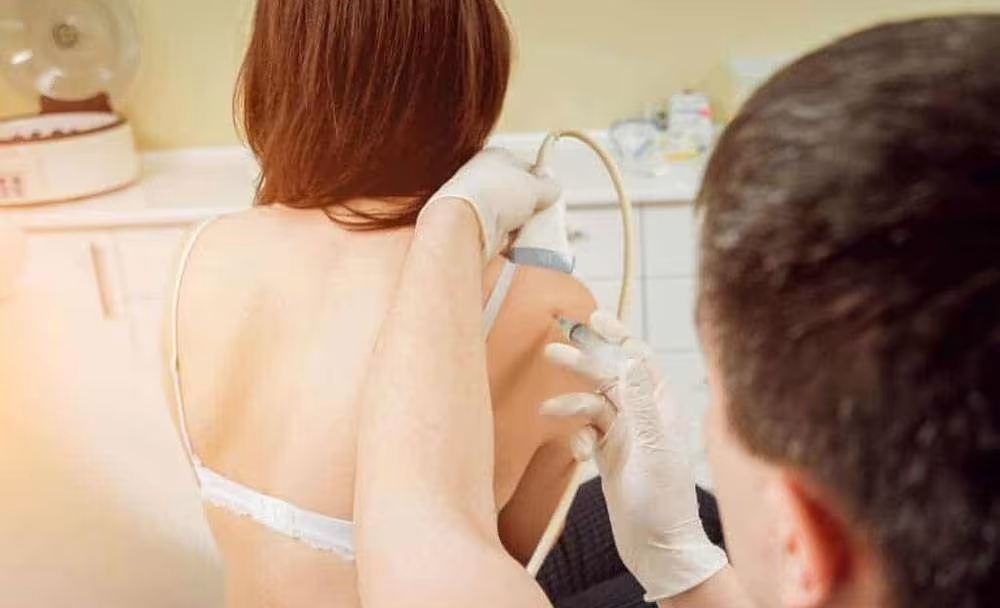
If an injection is part of your treatment plan, performing it under ultrasound guidance is the gold standard for safety and efficacy. By visualising the target structure in real time, the needle is guided to the precise location under direct vision.
Why Guidance Matters:
Injection Options
- Corticosteroid: Used to rapidly settle acute inflammation in joints or bursae.
- Hyaluronic Acid: A "viscosupplement" used to lubricate arthritic joints and improve mobility.
- High-Volume Injections: Specifically used for certain types of chronic tendinopathy to reduce pain and improve function.
Your Appointment: Preparation & Aftercare
- Documentation: If you have had previous imaging (MRI, X-ray, or ultrasound), please bring the results or reports.
- Consent: Peter will explain the findings and discuss treatment options immediately. If an injection is recommended, the procedure is explained in full, and we will obtain your informed consent before proceeding.
- Aftercare: The injection itself takes only a few minutes. You can usually drive home afterwards, but we recommend resting the area for 24 to 48 hours to allow the medication to settle and ensure the best result.
- Reports: A formal report of the scan findings can be sent to your GP or referring clinician upon request.
Pricing and Appointments
-
Diagnostic Ultrasound £242
-
MSK Diagnostic Ultrasound and Guided Injection £362
Conveniently Located in Waterlooville
- The Physiotherapy Centre 96 London Road, Widley, Waterlooville, Hampshire, PO7 5AB
- Mon: 8.00–7.00 | Tue: 8.00–7.30 | Wed: 8.00–8.00 | Thu: 8.00–7.00 | Fri: 8.00–5.00 | Sat: 8.30–1.00
- We serve patients from Widley, Purbrook, Waterlooville, Cosham, Havant, Petersfield, and the wider Hampshire area. The clinic is on the old A3 / London Road, just north of Portsdown Hill, near the Hampshire Rose pub. The No. 8 bus (Bushy Mead) stops just up the road.