
Evidence-Based Treatment for Tendon Problems Throughout the Body
Specialist Tendon Care at The Physiotherapy Centre
At our clinic in Waterlooville, tendon conditions are one of our core specialities. We don’t believe in just treating the symptoms; we focus on rebuilding the tendon’s ability to handle load. Our approach is built on progressive tendon loading programmes—the treatment method backed by the strongest clinical evidence—integrated with advanced tools like Shockwave Therapy (ESWT), EMTT, and diagnostic ultrasound.
We regularly support patients from Widley, Purbrook, Waterlooville, Cosham, Havant, and Petersfield who are dealing with tendon problems ranging from recent sports injuries to chronic conditions that have persisted for years. Our goal is to move you beyond temporary relief and toward a stronger, more resilient body.
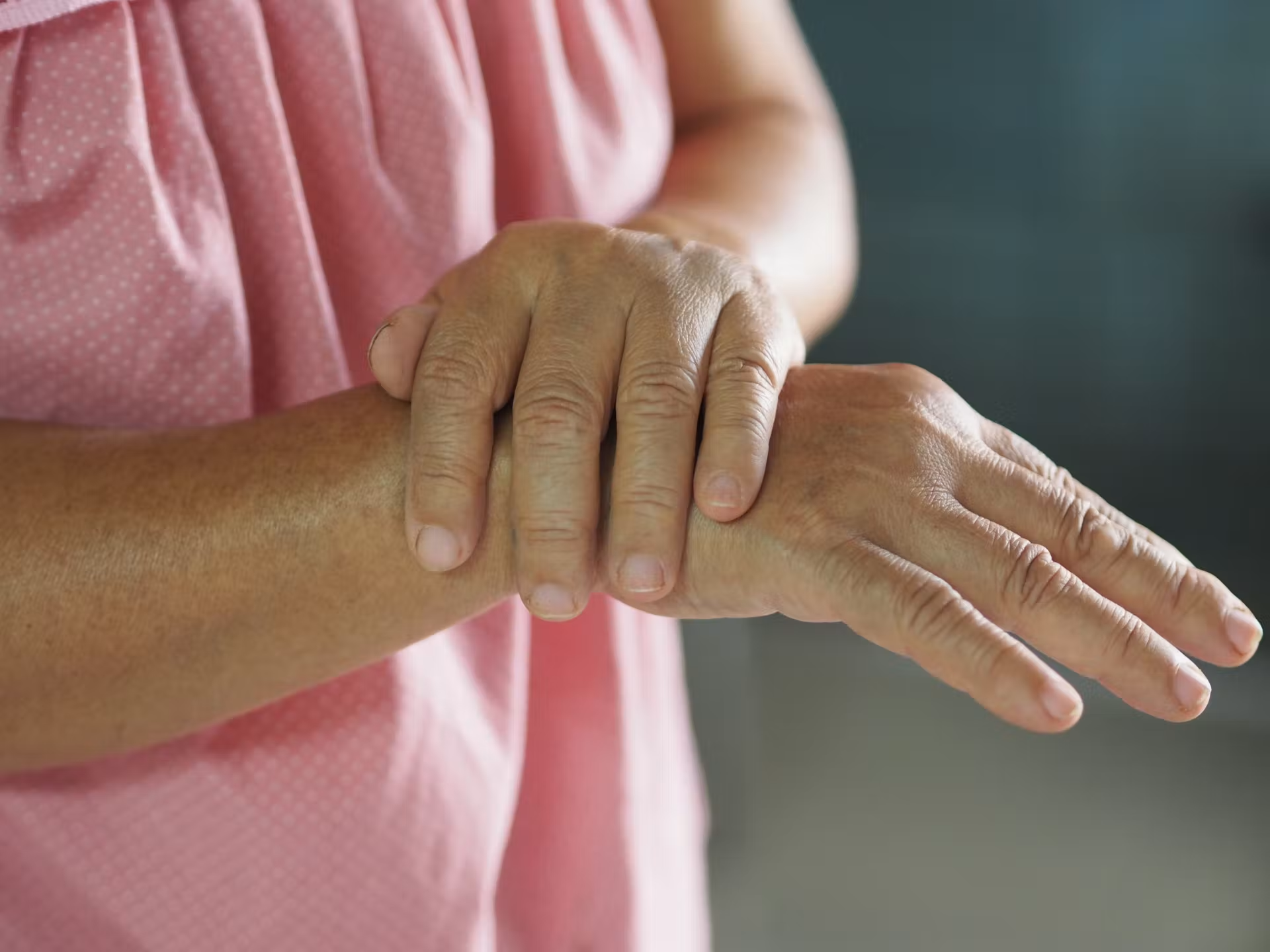
Understanding Tendinopathy
What Happens in a Tendinopathy?
Common Tendinopathies
- Achilles tendinopathy: Pain at the back of the ankle, common in runners and active individuals.
- Plantar fasciopathy: Heel pain caused by overloading of the plantar fascia, functionally similar to tendinopathy.
- Patellar tendinopathy (Jumper's knee): Pain below the kneecap, common in jumping sports.
- Gluteal tendinopathy (GTPS): Pain on the outer hip, particularly common in women over 40.
- Rotator cuff tendinopathy: Shoulder pain and weakness, common with overhead activities.
- Tennis elbow (lateral epicondylalgia): Pain on the outer elbow from overloading of the wrist extensor tendons.
- Golfer's elbow (medial epicondylalgia): Pain on the inner elbow from overloading of the wrist flexor tendons.
- De Quervain's tenosynovitis: Pain on the thumb side of the wrist, common in new parents and repetitive hand workers.
- Peroneal tendinopathy: Pain behind the outer ankle bone, common in runners and people with ankle instability.
Why Do Tendons Become Painful?

How We Treat Tendon Pain
Assessment and Diagnosis
Your recovery starts with a targeted assessment to confirm exactly which tendon is affected and to determine the stage of the condition. Your physiotherapist will perform specific “loading” tests—resisted muscle movements designed to see how the tendon handles tension—alongside a detailed check of the strength and endurance of the surrounding muscles. We also look at the bigger picture: your biomechanics (how you move and walk) and systemic factors like hormonal health, medication, or general lifestyle. This comprehensive approach ensures we aren’t just treating where it hurts, but addressing why it happened.
Progressive Tendon Loading
This is the foundation of tendinopathy treatment. Because tendons respond to the right amount of stress, your programme will follow a structured progression: starting with isometric loading (holding positions to calm pain), moving to isotonic loading (strengthening through range), and advancing to heavy slow resistance training—the current gold standard for rehabilitation. Finally, we incorporate functional and sport-specific loading to prepare you for a full return to activity. Your physiotherapist will adjust the intensity at every session based on your symptoms and objective progress.
Manual Therapy
While loading is the “medicine” for the tendon, hands-on treatment is vital for support. We use manual therapy to address the pain, muscle tightness, and joint stiffness that often develop alongside tendinopathy. This may include soft tissue release of the associated muscles, joint mobilisation to restore movement, or neural mobilisation if we find that nerve sensitivity is contributing to your discomfort. These techniques help “clear the way” so you can perform your rehabilitation exercises more effectively.
Shockwave Therapy and EMTT
For chronic cases that have been stubborn or slow to respond, we offer advanced technology to kickstart the healing process.
- Shockwave Therapy (ESWT): Supported by strong evidence for Achilles, gluteal, and elbow tendinopathies. It stimulates tendon remodelling and provides significant pain relief.
- EMTT: For deeper tissue engagement, which can be combined with shockwave for enhanced results, helping you bridge the gap between persistent pain and active recovery.
Diagnostic Ultrasound
To remove any guesswork, on-site diagnostic ultrasound with Peter Monk is available. This allows us to look directly at the tendon structure, confirming the diagnosis and monitoring your healing over time. It is particularly useful for distinguishing between a tendinopathy and a tendon tear, or for guiding treatment decisions when symptoms aren’t responding as expected. Having this high-level diagnostic tool in-house ensures your treatment is always based on clinical certainty.

What to Expect at Your First Appointment
Your First Appointment: What to Expect
Practicalities for your visit:
- What to wear: Please wear clothing that allows easy access to the affected area (e.g., shorts for leg issues or a vest top for shoulder issues).
- Footwear: If your tendon pain is activity-related, please bring your running shoes or sports footwear so we can assess your gear and your movement patterns.
- Assessment Activities: Your physiotherapist will guide you through specific tests to see how your tendon handles tension, which may include walking, balance drills, or resisted movements.
- Immediate Progress: You won’t leave empty-handed. You will leave with a clear diagnosis, an initial loading programme to begin stimulating the tendon, and expert advice on how to modify your current activities to avoid further irritation.
Honesty in Recovery
We believe in realistic expectations, and that starts with a conversation about patience. Tendons are unique tissues; they respond exceptionally well to loading, but they respond slowly.
Your physiotherapist will set honest expectations from the outset. While pain relief often begins in the early stages, a minimum of twelve weeks of consistent exercise is typically needed to change tendon structure, and many conditions take three to six months to resolve fully. We are here to provide the roadmap and the support to keep you on track through every phase of that journey.
Pricing and Appointments
-
Initial Assessment £79 (45 minutes) or £89 (60 minutes)
-
Follow-Up Session £72 (30 minutes)
Conveniently Located in Waterlooville
- The Physiotherapy Centre 96 London Road, Widley, Waterlooville, Hampshire, PO7 5AB
- Opening Hours: Mon: 8.00–7.00 | Tue: 8.00–7.30 | Wed: 8.00–8.00 | Thu: 8.00–7.00 | Fri: 8.00–5.00 | Sat: 8.30–1.00
- We serve patients from Widley, Purbrook, Waterlooville, Cosham, Havant, and Petersfield. The clinic is on the old A3 / London Road, just north of Portsdown Hill, near the Hampshire Rose pub. The No. 8 bus (Bushy Mead) stops just up the road.