Women's Health & Menopause Physiotherapy in Waterlooville

Specialist Support for Pelvic Health, Menopause, and Musculoskeletal Changes

A woman’s body goes through incredible changes throughout life—from pregnancy and the postnatal period through to perimenopause and beyond. While many of the symptoms that come with these transitions are common, they are not something you simply have to ‘put up with.’ Women’s health physiotherapy provides effective, evidence-based treatment for pelvic floor issues, menopause-related symptoms, and the various musculoskeletal conditions that disproportionately affect women.

At The Physiotherapy Centre, our women’s health service is led by Angela Goldstein, a Chartered Physiotherapist with specialist training in pelvic health and menopause. We understand that these topics can be deeply personal, which is why all appointments are strictly private, one-to-one, and conducted with the utmost sensitivity.

Many women wait years before seeking help for symptoms like incontinence or prolapse, often believing it’s just a normal part of ageing or motherhood. It doesn’t have to be. You don’t need a GP referral to book, and you certainly don’t need to wait any longer to start feeling like yourself again.
Womens Health scaled

Conditions We Treat

Our women’s health service covers a broad range of conditions, including:
Pelvic Floor Dysfunction
Weakness, overactivity, or poor coordination of the pelvic floor muscles. This can present as urinary or faecal incontinence, urgency, difficulty emptying the bladder or bowel, or pelvic heaviness.
Prolapse
Descent of the bladder, uterus, or bowel into the vaginal wall. Physiotherapy is recommended by NICE as a first-line treatment for pelvic organ prolapse and can significantly reduce symptoms.
Incontinence
Stress incontinence (leaking with coughing, sneezing, or exercise), urge incontinence (a sudden, strong need to urinate), or mixed incontinence. Pelvic floor rehabilitation is the most effective conservative treatment.
Pelvic Pain
Persistent or recurrent pain in the pelvic region, which may be related to muscle tension, endometriosis, or other gynaecological conditions.
Menopause MOT
A comprehensive assessment of how perimenopause and menopause are affecting your musculoskeletal health, sleep, and wellbeing. This includes screening for joint pain, tendinopathies, frozen shoulder, headaches, and osteoporosis risk.
Menopause-Related Musculoskeletal Conditions
Frozen shoulder, arthralgia and joint pain, tendinopathies, osteoporosis, and headaches. Declining oestrogen levels have a direct effect on tendons, joints, and bone density, and these conditions are frequently underdiagnosed in perimenopausal and menopausal women.
Sleep and Wellness
Advice and strategies for managing menopause-related sleep disturbance and supporting general physical wellbeing through this transition.

How We Treat: Our Approach

Detailed Assessment and Screening

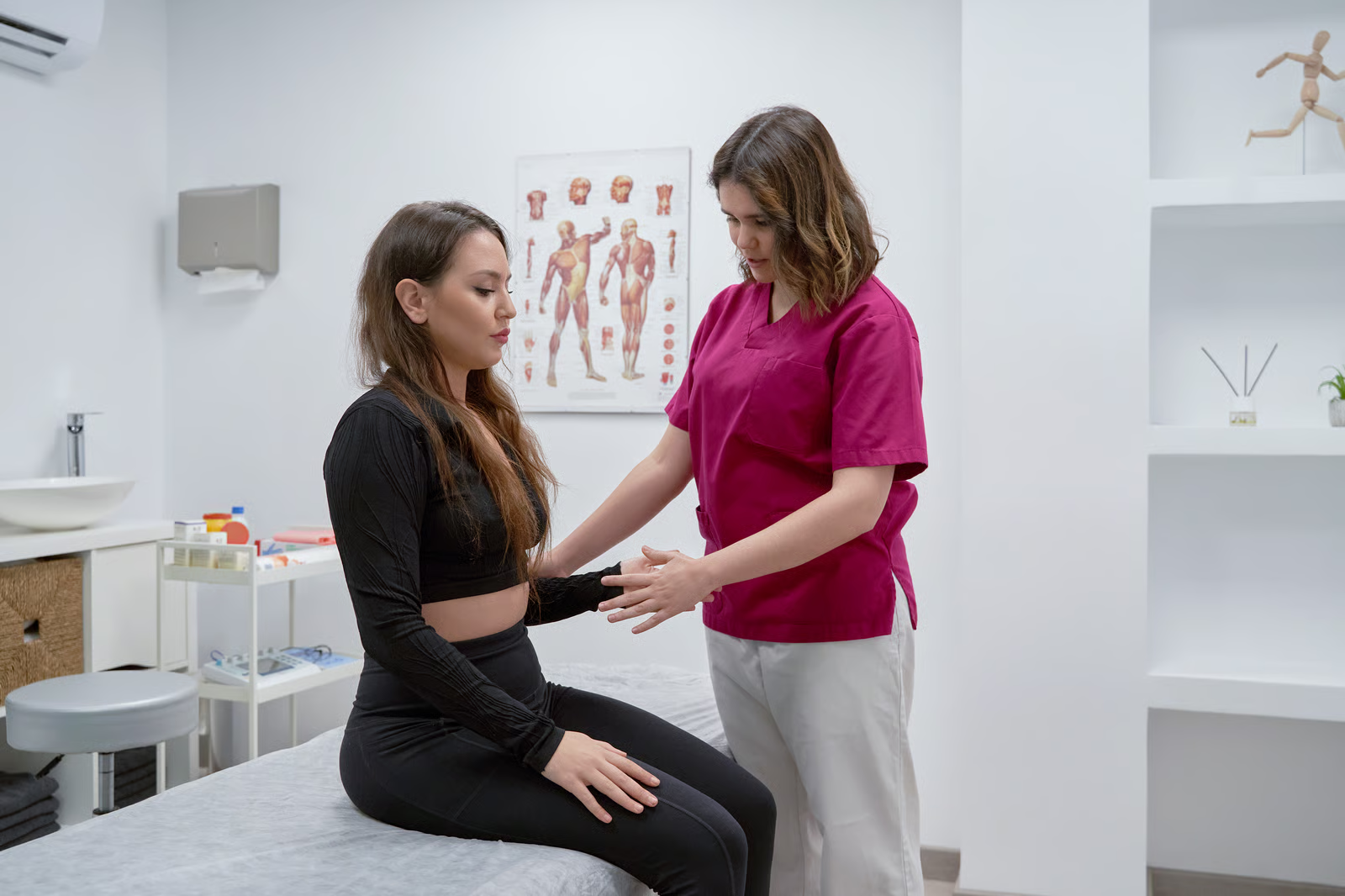
Your journey begins with a private, thorough discussion about your symptoms, medical history, and hormonal health. We don’t just look at the physical symptoms; we look at how they are impacting your daily life, confidence, and sleep. For pelvic floor concerns, you may be offered an internal examination. This is the gold standard for assessment, allowing Angela to check muscle strength, tone, and coordination with precision. This is entirely optional and only performed with your full consent. For menopause-related issues, we carry out a full physical examination of the relevant joints, tendons, and muscles to understand how hormonal shifts are affecting your movement.
If a pelvic floor issue is identified, we move far beyond generic Kegels. Research consistently shows that supervised pelvic floor training with a specialist is significantly more effective than going it alone. Based on your assessment, Angela will design a programme that addresses your specific dysfunction—whether that requires strengthening, relaxation techniques for overactive muscles, coordination training, or biofeedback. The goal is a pelvic floor that is functional, responsive, and reliable.
Managing menopause-related conditions requires a holistic view of the body. Your treatment includes a tailored programme specifically designed to protect bone health, improve joint mobility, and manage tendon loading—all of which can be affected by changing oestrogen levels. Angela provides expert advice on how to adapt your training to work with your body’s changes rather than against them, helping you manage symptoms like joint stiffness, fatigue, and headaches through movement and lifestyle adjustments.
E109SZBL

What to Expect at Your First Appointment

Your initial assessment at The Physiotherapy Centre lasts 60 minutes. We ensure these sessions take place in a completely private treatment room to provide a quiet, comfortable space for open conversation.

We’ll begin by discussing your symptoms, but also the broader context of your health—including your menstrual and hormonal history, any pregnancies, and your general medical background. This holistic view is essential for understanding how your body is functioning as a whole.

The Physical Assessment: The physical side of the appointment is tailored entirely to your specific concerns: 

A few practical tips:

Pricing and Appointments

  • Initial Assessment £99 (60 minutes)
  • Follow-Up Session £78 (30 minutes)

Conveniently Located in Waterlooville

Frequently Asked Questions

Do I need a GP referral for women’s health physiotherapy?

No. You can self-refer directly by contacting the clinic. Many women find this quicker and more straightforward than waiting for a GP appointment.
Not necessarily. An internal examination is offered where it would help assess pelvic floor function—for example, in cases of prolapse or incontinence—but it is always optional. If you prefer not to have one, your physiotherapist will work with you using external assessment methods and adapt your treatment accordingly.
Yes. NICE guidelines recommend pelvic floor muscle training as a first-line treatment for pelvic organ prolapse. Research shows that a supervised programme can reduce prolapse symptoms and improve pelvic floor support. It does not reverse the prolapse, but it can make a significant difference to how you feel and function.
No. Incontinence is common, but it is not an inevitable part of getting older or having children. Pelvic floor physiotherapy is effective for the majority of women with stress, urge, or mixed incontinence—often avoiding the need for surgery.
It is a thorough assessment of how perimenopause or menopause is affecting your body. Angela will screen your joints, tendons, bone health risk, sleep patterns, and overall physical function, then provide tailored advice and a management plan. It is particularly useful if you have developed new aches, stiffness, or injuries that coincided with hormonal changes.
Yes. There is a strong association between declining oestrogen levels and frozen shoulder (adhesive capsulitis). Women in perimenopause and menopause are significantly more likely to develop this condition. Early physiotherapy can help manage pain and restore movement.
Most women see improvement within four to six sessions, but this depends on the severity of your symptoms and how consistently you practise your home exercises. Your physiotherapist will set clear goals and review progress at each appointment.
Yes, and in most cases you should. Exercise is important for overall health, including pelvic floor health. Angela can advise on which exercises are safe, which to modify, and how to manage intra-abdominal pressure during activity. Avoiding exercise altogether is not recommended.
No. Pelvic floor problems and menopause-related symptoms affect women regardless of whether they have had children. Women who have not been pregnant can still experience incontinence, pelvic pain, and the musculoskeletal effects of hormonal changes.
Yes. We are recognised by Bupa, AXA PPP, Aviva, WPA, and Cigna. Contact your insurer for an authorisation number before your first appointment.
Team

Meet the Team Supporting Your Recovery