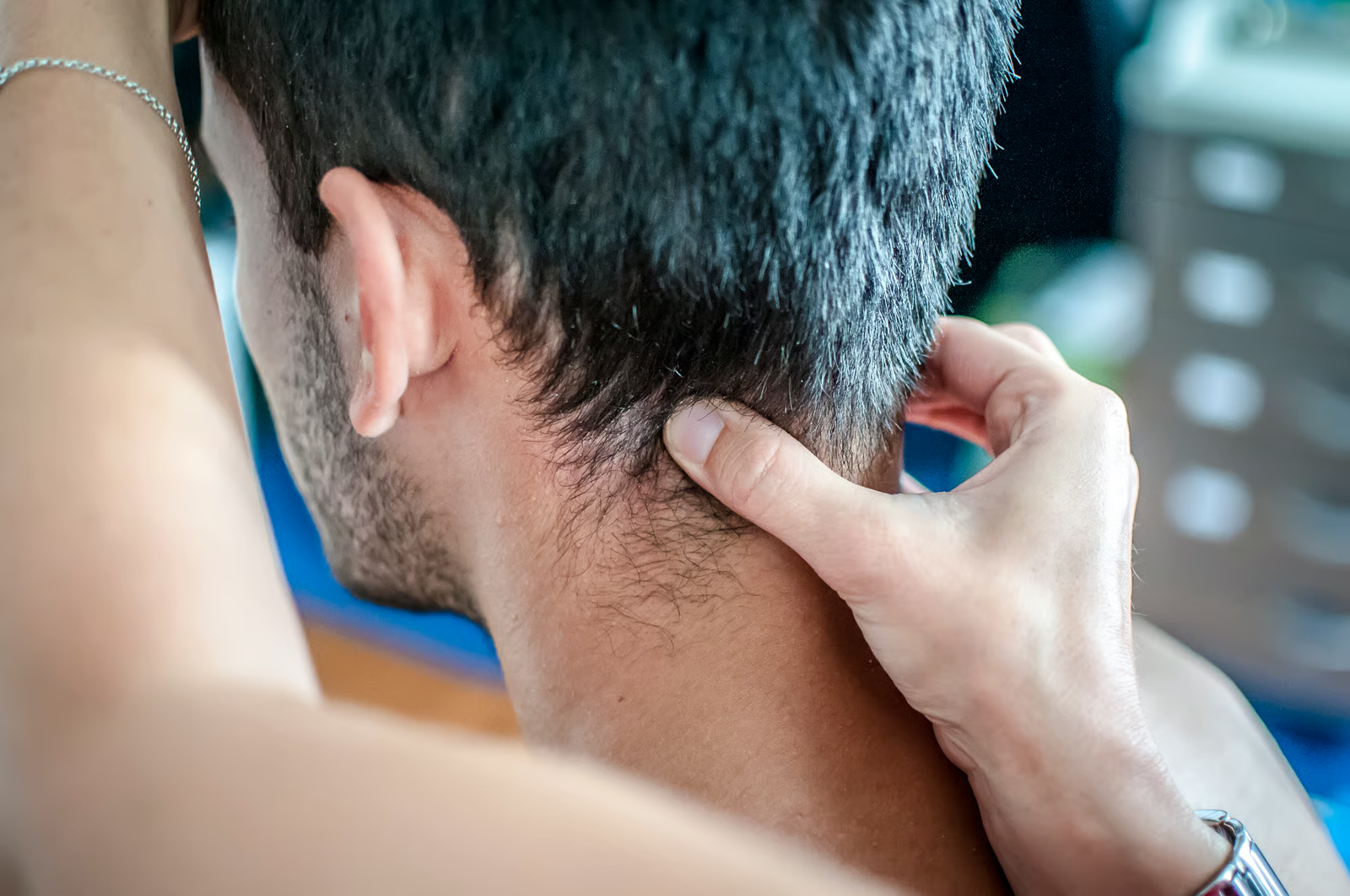
Sports Therapy & Injury Rehab in Waterlooville

Get Back to Full Fitness After Injury — Whether You Are an Athlete or Not

You don’t have to be a professional athlete to benefit from sports therapy. Whether you’ve torn a muscle during five-a-side, developed a stubborn knee pain from your morning runs, or find that a nagging injury keeps flaring up every time you try to push your training, sports therapy provides the structured, ‘no-nonsense’ approach you need to recover properly.

The real difference between sports therapy and general physiotherapy is the focus. While both aim to get you moving, sports therapy prioritises functional rehabilitation. Our goal isn’t just to get you pain-free; it’s to make you strong enough to return to your sport, gym, or hobby without that constant worry of re-injury.

Treatment at The Physiotherapy Centre combines hands-on manual therapy with progressive, goal-oriented exercise programmes. We don’t do ‘fluff’—your plan will be built entirely around the specific movements and demands of your sport, ensuring you’re back in the game and performing at your best as quickly as possible.
Sports Therapy

Conditions We Treat

We work with people across Waterlooville, Widley, Purbrook, and the surrounding Hampshire area who usually fall into one of three broad categories. Whatever your situation, our approach is always about finding the fastest, safest route back to your routine:
You don’t have to wait for things to ‘settle down’ before seeing us—often, the sooner we see you, the sooner we can get you moving again.
Acute Injuries
These are the sudden ‘oops’ moments—muscle tears, ligament sprains, and joint strains sustained during sport or activity. These need a professional eye early on so we can grade the injury accurately and start the right management plan from day one.
Chronic Problems
This is the long-term back, neck, knee, or shoulder pain that simply hasn’t gone away with rest alone. Usually, ‘just resting’ isn’t the answer; these conditions often require a thorough reassessment and a structured loading programme to fix the underlying cause.
Repetitive & Overuse Injuries
Things like tendinopathies, stress reactions, and issues caused by training errors or biomechanical ‘glitches.’ If you find yourself frequently breaking down just as you start to see progress, our focus shifts to identifying those contributing factors and correcting them for good.

How We Treat: Our Approach

Functional Assessment

Your first session goes far beyond just identifying which bit of your body is sore. Your sports therapist will look at the bigger picture—assessing how you move, your muscle strength, flexibility, balance, and the specific movement patterns relevant to your sport. This level of detail helps us pinpoint not just what is injured, but exactly why it happened in the first place, helping us stop it from happening again.
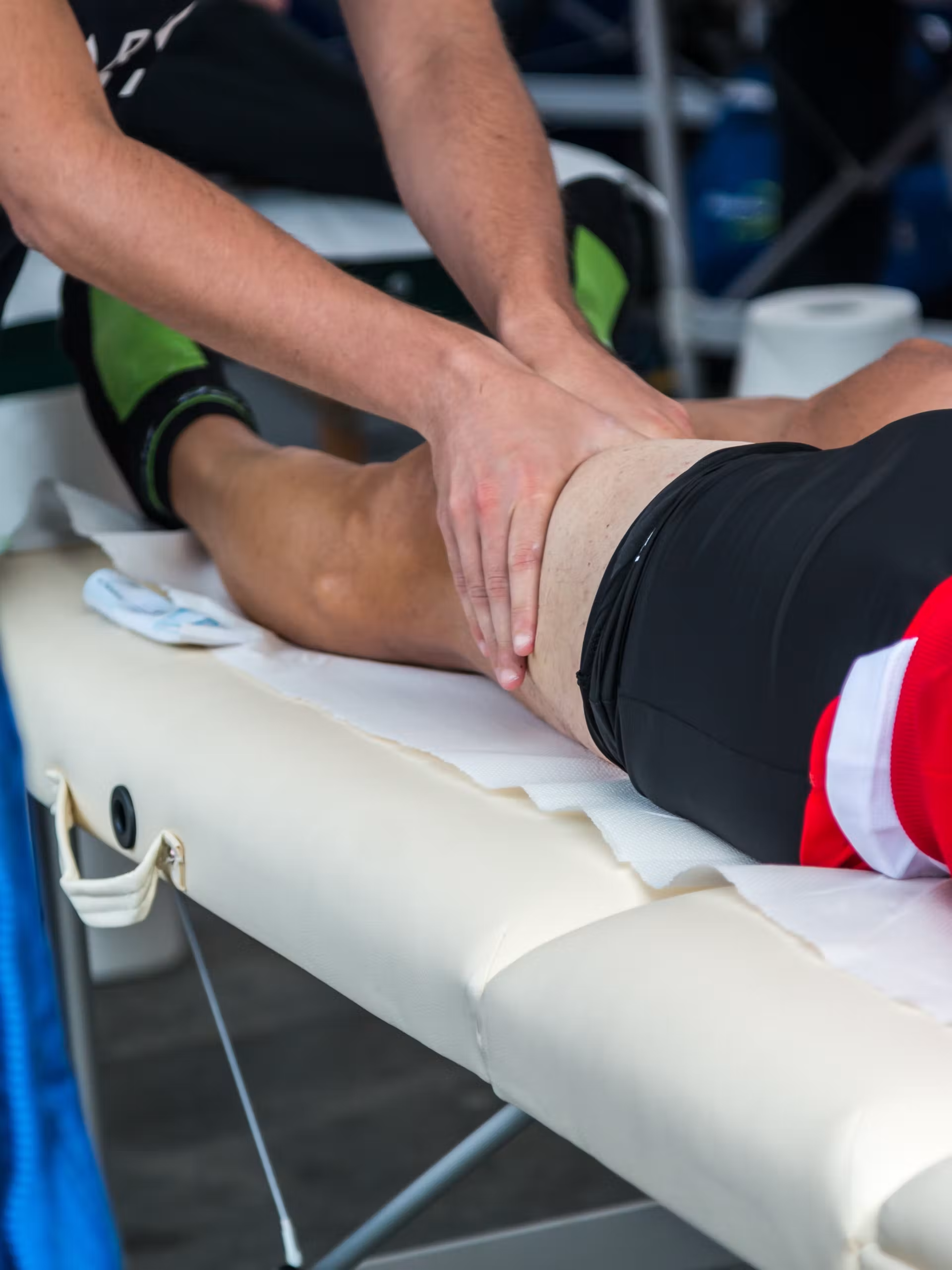
In the early stages, our priority is settling things down. We use a range of techniques including soft tissue work, joint mobilisations, sports massage, and trigger point therapy to reduce your pain and get your range of movement back. For those stubborn, chronic tendon injuries that just won’t budge, we can also use Shockwave Therapy to help re-start the healing process and accelerate your recovery.
Rehabilitation is the real engine room of sports therapy. We don’t just give you a list of exercises and hope for the best; your programme is progressed through clear, logical stages. We move from early pain management into strength and control work, eventually reaching sport-specific drills and return-to-play testing. The ultimate aim is to ensure you’re performing with total confidence, rather than just being mostly out of pain.
E10OH6U

What to Expect at Your First Appointment

Your initial assessment at The Physiotherapy Centre lasts 45 minutes, and we hit the ground running. Because we need to see how your body handles movement, please bring your trainers and wear clothing that lets you move freely—don’t be surprised if we ask you to squat, lunge, or mimic the specific movements you do during your sport.
By the end of this first session, you won’t just have a diagnosis; you’ll have a roadmap. Your therapist will clearly explain what’s going on, outline a step-by-step treatment and rehab plan, and give you your first set of exercises to start immediately. We believe in being proactive, so you’ll leave that very first appointment already working toward your recovery.

Pricing and Appointments

  • Initial Assessment £72 (45 minutes)
  • Follow-Up Session £57 (30 minutes)

Conveniently Located in Waterlooville

Frequently Asked Questions

Do I need to be sporty to benefit from sports therapy?

No. Sports therapy techniques are effective for anyone with a musculoskeletal injury, regardless of fitness level. If you have strained your back gardening, injured your knee on a walk, or have a physical job that has caused an overuse problem, sports therapy can help.
Both treat musculoskeletal injuries, but sports therapy places greater emphasis on functional rehabilitation, return to activity, and performance. Physiotherapy covers a broader clinical scope including neurological and respiratory conditions. For sports-related injuries and gym-based rehab, sports therapy is often the most direct route.
As soon as possible. Early assessment allows us to grade the injury accurately, advise on what to avoid, and start treatment promptly. For acute injuries, being seen within the first 48 to 72 hours can significantly improve your recovery timeline.
Recovery time varies considerably. A mild muscle strain may resolve in two to four weeks, while a significant ligament sprain can take three to six months of structured rehabilitation. Your therapist will give you an honest, realistic timescale based on the severity of your injury.
Yes — this is one of its main strengths. Recurring injuries usually point to an underlying weakness, movement pattern issue, or training error. Sports therapy identifies these contributing factors and addresses them through targeted rehabilitation, reducing your risk of re-injury.
Not necessarily. Where possible, your therapist will modify your training so you can stay active while the injury recovers. Complete rest is rarely the best approach. You will be guided on what to continue, what to scale back, and when it is safe to return to full activity.
Yes. We regularly treat injuries from weightlifting, CrossFit, and general gym training — including lower back strains, shoulder impingement, and knee pain from squatting or deadlifting. Your therapist can also review your technique and programming to prevent recurrence.
Sports therapy is not covered by health insurance as standard, as insurance providers typically require treatment from a HCPC-registered physiotherapist. If you need insured treatment for a sports injury, our chartered physiotherapists can help. Contact us to discuss the best option.
Wear comfortable, flexible clothing and bring your trainers. If you have any relevant scan results, surgical notes, or previous treatment records, bring those too.
No. You can book directly without a GP referral. Sports therapists are trained to identify when onward referral to a GP or other clinician is needed.
Team

Meet the Team Supporting Your Recovery