
Proven Treatment for One of the Most Common Tendon Problems
Expert Achilles Care at The Physiotherapy Centre
At our clinic in Waterlooville, Achilles tendinopathy is one of our most frequently treated conditions. Our approach follows current evidence, moving away from temporary fixes and toward building long-term tendon resilience. We combine progressive tendon loading with advanced adjunct treatments such as Shockwave Therapy and EMTT to support the healing process when needed.
We regularly see patients from Widley, Purbrook, Waterlooville, Cosham, Havant, and Petersfield who are looking to get back to running, sports, or simply walking without that signature morning stiffness. Our team provides the structured environment you need to restore your tendon’s strength and get back to your active life.
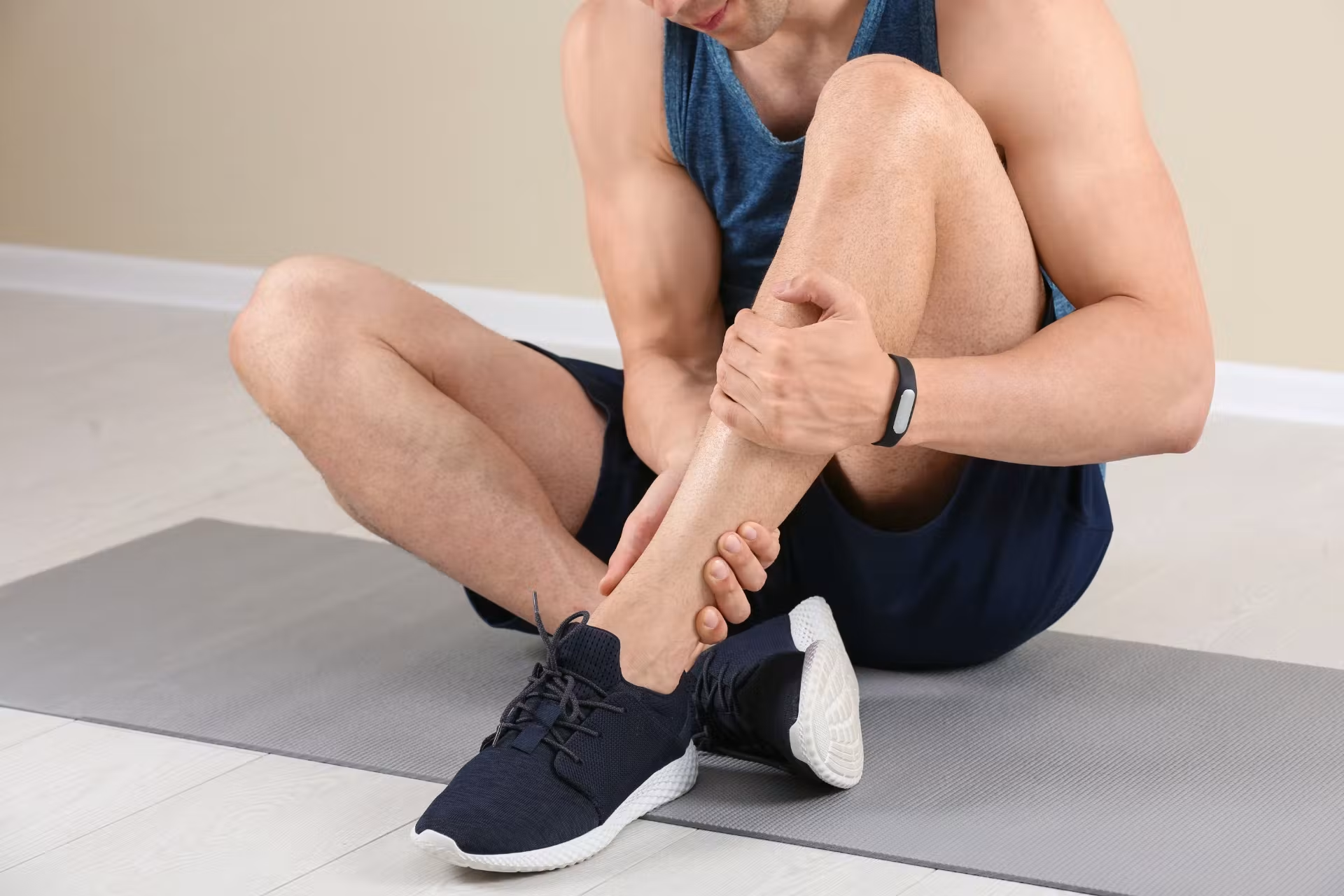
Understanding Achilles Tendinopathy
What Happens in the Tendon?
- Mid-portion tendinopathy: The most common form. Pain and thickening occur in the middle of the tendon, typically two to six centimetres above the heel bone. This is the type most commonly seen in runners and active individuals.
- Insertional tendinopathy: Pain occurs where the tendon attaches to the heel bone (calcaneus). This type is more common in less active individuals, is associated with compressive loading, and can involve calcification at the insertion point.
The distinction matters because the treatment approach differs — insertional tendinopathy requires modifications to the loading programme to avoid compressive positions.
Common Causes and Risk Factors
Symptoms
When to Seek Urgent Attention

How We Treat Achilles Tendinopathy
Here is the assessment and treatment text for the Achilles, adapted into our established clinical flow:
Clinical Assessment
Your recovery starts with a thorough assessment to understand the exact nature of your injury. Your physiotherapist will begin with palpation of the tendon to identify whether the issue is mid-portion or insertional tendinopathy, as these require different management. We then move into functional testing, including calf raise endurance and strength tests, and a detailed assessment of your ankle range of movement and calf flexibility. We also look at the bigger picture, screening for contributing factors such as lower limb alignment, footwear, and training load. If relevant to your goals, we may also perform a gait or running biomechanics analysis to see how the tendon is behaving under dynamic load.
Progressive Tendon Loading: The Cornerstone of Treatment
The most effective treatment for Achilles tendinopathy is a structured, progressive loading programme. Tendons thrive on the right amount of stress, so our approach follows a well-established evidence base: we start with isometric calf holds to reduce pain, before moving into isotonic calf raises and heavy slow resistance training—currently the gold standard for tendon rehabilitation. For those returning to sport, we advance to plyometric and sport-specific loading. Because tendons adapt slowly, consistency is key; while pain relief often begins early, a minimum of twelve weeks is typically needed for the tissue to remodel, with full recovery taking three to six months depending on the severity.
Addressing Contributing Factors
While the loading programme is vital, we also focus on the factors that allowed the tendinopathy to develop in the first place. This involves more than just strengthening the calf (though weakness is almost always present); we work with you on training load modification—adjusting your running volume, intensity, or surfaces—and provide specific footwear advice. If our assessment identifies biomechanical issues, we may also incorporate gait retraining to ensure you aren’t placing unnecessary stress on the tendon as you move.
Adjunct Treatments
For Achilles tendinopathy that hasn’t responded fully to exercise alone, or where pain is making it difficult to engage with your rehab, we offer advanced adjunct treatments. Shockwave Therapy (ESWT) is a highly effective, evidence-based tool that stimulates tendon remodelling and provides significant pain relief. We also utilise EMTT for deeper tissue engagement, which can be particularly helpful for insertional tendinopathy. To ensure complete clarity, diagnostic ultrasound can be used to confirm the diagnosis, assess the internal structure of the tendon, and monitor your healing progress over time.
What to Expect at Your First Appointment
Your First Appointment: What to Expect
Practicalities for your visit:
- What to wear: Please wear a pair of shorts or bring them with you. Your physiotherapist will need to clearly observe your lower legs, ankles, and feet during the examination.
- Footwear: If your pain is triggered by running or sports, please bring your running shoes or sports footwear. This allows us to assess your gear and how it might be influencing your tendon load.
- Assessment Activities: To see how your tendon is coping, your therapist may ask you to perform calf raises, walk, or demonstrate specific movements related to your sport or daily activity.
- Immediate Progress: You will leave with a clear diagnosis, an initial loading programme, and specific advice on activity modification. If your pain is particularly severe, our first priority will be pain management to settle the tendon before we progress your loading.
Honesty in Recovery
We believe in realistic expectations. While we can often reduce your pain relatively quickly, tendons are slow-adapting tissues. Your physiotherapist will provide an honest assessment of your recovery timeline; for an Achilles tendon, this typically requires a minimum of twelve weeks of consistent loading, with full recovery often taking three to six months. We will outline the milestones we are aiming for to ensure you are staying on track.
Whether your goal is to return to your morning run, get back on the pitch, or simply walk without that frustrating morning stiffness, we are here to provide the roadmap to get you there.
Pricing and Appointments
-
Initial Assessment £79 (45 minutes) or £89 (60 minutes)
-
Follow-Up Session £72 (30 minutes)
Conveniently Located in Waterlooville
- The Physiotherapy Centre 96 London Road, Widley, Waterlooville, Hampshire, PO7 5AB
- Opening Hours: Mon: 8.00–7.00 | Tue: 8.00–7.30 | Wed: 8.00–8.00 | Thu: 8.00–7.00 | Fri: 8.00–5.00 | Sat: 8.30–1.00
- We serve patients from Widley, Purbrook, Waterlooville, Cosham, Havant, and Petersfield. The clinic is on the old A3 / London Road, just north of Portsdown Hill, near the Hampshire Rose pub. The No. 8 bus (Bushy Mead) stops just up the road.