
Comprehensive Treatment for the Joints That Keep You Moving
The causes of hip and knee pain are incredibly varied—ranging from osteoarthritis and tendon problems to ligament injuries and post-surgical stiffness. Because a ‘sore knee’ can originate from many different structures, each requiring a very specific approach, effective treatment always starts with an accurate diagnosis.
Comprehensive Care Under One Roo
At The Physiotherapy Centre in Waterlooville, our team is experienced in assessing and treating the full range of hip and knee conditions. What makes our clinic unique is that your entire treatment pathway is coordinated in one place. With chartered physiotherapists, sports therapists, on-site diagnostic ultrasound, shockwave therapy, EMTT, and hydrotherapy all available, we can take you from initial diagnosis right through to advanced rehabilitation.
We regularly support patients from Widley, Purbrook, Waterlooville, Cosham, Havant, and Petersfield for hip and knee problems ranging from acute sports injuries to long-term joint pain. Whether you are dealing with a recent flare-up or a condition that has been holding you back for years, we have the tools and the expertise to help you move forward.
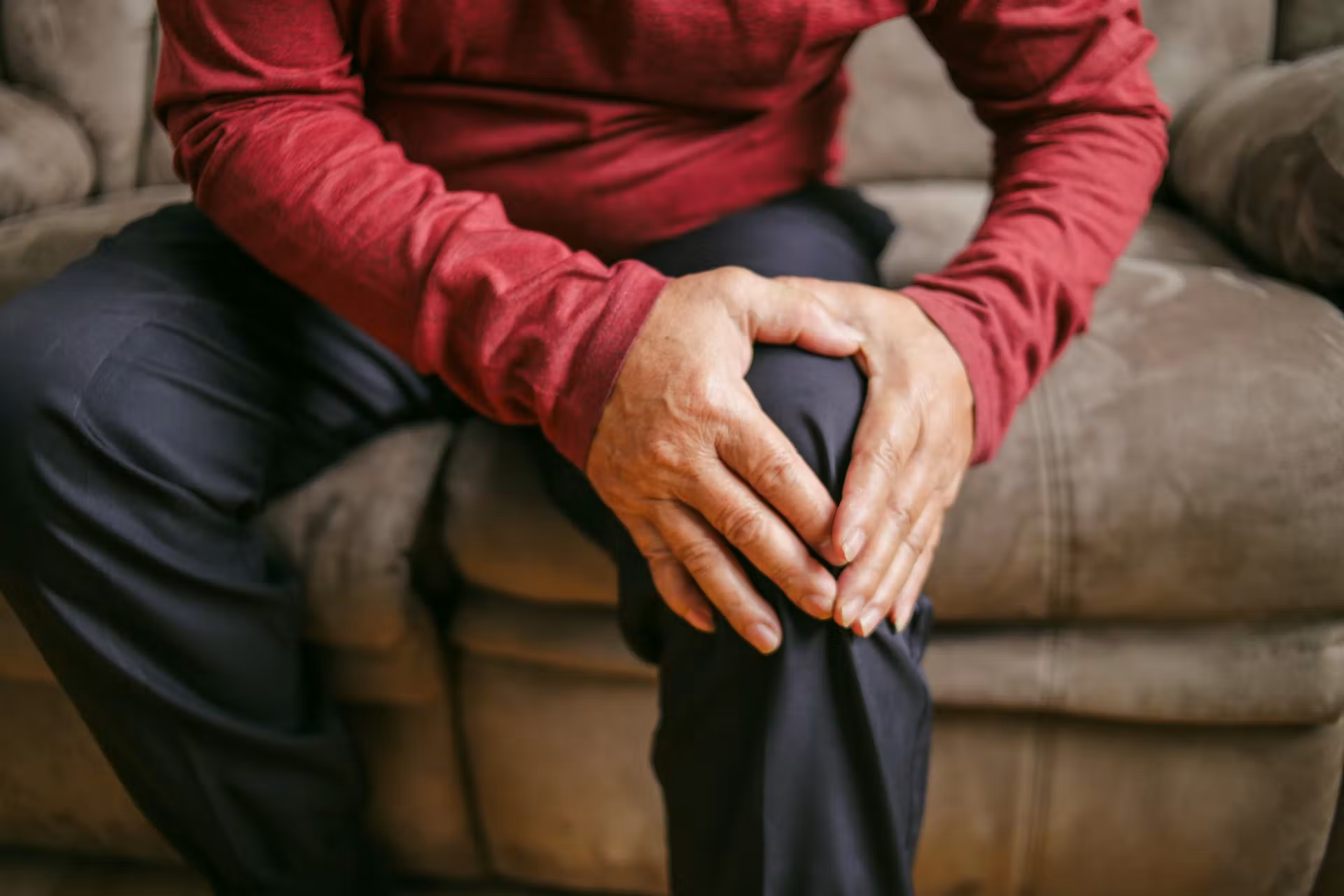
Understanding Hip & Knee Pain
Common Hip Conditions
- Hip osteoarthritis: The most common cause of hip pain in adults over 50. Cartilage loss within the hip joint leads to pain, stiffness (particularly in the morning or after sitting), and reduced range of movement. NICE recommends exercise and physiotherapy as first line treatment. A well structured programme can significantly reduce symptoms and delay or avoid the need for hip replacement.
- Greater trochanteric pain syndrome (GTPS): Pain on the outer aspect of the hip, previously known as trochanteric bursitis. It is now understood to involve gluteal tendinopathy rather than bursitis in most cases. Symptoms include pain lying on the affected side, walking upstairs, and standing on one leg. It is particularly common in women over 40 and during menopause.
- Hip labral tears: Tears in the ring of cartilage (labrum) that lines the hip socket. These can cause catching, clicking, and groin pain, particularly with deep flexion or rotation. Diagnosis may require imaging, and treatment depends on the severity.
- Hip flexor and adductor strains: Common in sports involving kicking, sprinting, and sudden changes of direction.
Common Knee Conditions
- Knee osteoarthritis: Cartilage wear within the knee joint, causing pain, swelling, stiffness, and difficulty with stairs and prolonged walking. As with hip osteoarthritis, physiotherapy and exercise are recommended by NICE as first line treatment.
- Patellofemoral pain (anterior knee pain): Pain at the front of the knee, around or behind the kneecap. Common in runners, cyclists, and people who sit for long periods. It is typically caused by an imbalance in the muscles controlling the kneecap and responds well to targeted strengthening.
- Ligament injuries: Sprains or tears of the ACL, PCL, MCL, or LCL, usually occurring during sport. The severity ranges from a minor sprain to a complete rupture requiring surgical reconstruction. Accurate assessment and grading is essential for determining the right management.
- Meniscal injuries: Tears in the shock absorbing cartilage of the knee. Symptoms include catching, locking, swelling, and pain with twisting movements. Many meniscal tears can be managed conservatively with physiotherapy.
- Patellar tendinopathy (Jumper's knee): Overloading of the patellar tendon, causing pain below the kneecap. Common in jumping sports and in people who have rapidly increased their training load.
- Baker's cyst: A fluid filled swelling behind the knee, often associated with osteoarthritis or meniscal injury. Treatment addresses the underlying cause.

How We Treat Hip & Knee Pain
Thorough Clinical Assessment
At The Physiotherapy Centre, we believe that a successful recovery starts with a deep understanding of how you move. Your physiotherapist will carry out a detailed assessment that includes gait analysis—observing exactly how you walk—alongside joint range-of-movement and muscle strength testing. We pay close attention to the hip abductors, quadriceps, and hamstrings, using specific ligament and meniscal tests for the knee where necessary.
By incorporating functional tests, such as single-leg squats, step-downs, and balance assessments, we identify more than just the painful structure; we pinpoint the contributing factors—whether that’s weakness, stiffness, or specific movement patterns—that are maintaining the problem.
Strengthening and Exercise Rehabilitation
Exercise is the most effective treatment for the majority of hip and knee conditions. Your programme will be bespoke, targeting the specific muscles identified as weak or underactive during your assessment. For hip pain, this typically includes gluteal strengthening, hip flexor work, and balance training. For knee pain, quadriceps strengthening is often the cornerstone of recovery, supplemented by hamstring and calf work. We ensure your exercises are progressed safely, moving from simple, low-load movements to functional, weight-bearing activities that mimic your daily life.
Manual Therapy
We use hands-on techniques to help reduce your pain, improve joint mobility, and address any soft tissue restrictions that might be holding you back. This may include hip or knee joint mobilisations, patellofemoral (kneecap) joint work, and soft tissue release for the quadriceps or iliotibial band. If our assessment shows that nerve sensitivity is contributing to your discomfort, we also incorporate neural mobilisation to help calm the system down and restore fluid movement.
Adjunct Treatments
Depending on your specific condition, your physiotherapist may recommend integrating our advanced technology to accelerate your recovery. We offer Shockwave therapy (ESWT) for conditions like gluteal or patellar tendinopathy, and EMTT to address deeper joint issues like osteoarthritis. For post-surgical rehab or when land-based exercise is simply too painful, our Hydrotherapy pool is an excellent low-impact option. Additionally, if there is diagnostic uncertainty, we can provide diagnostic ultrasound and guided injections for persistent bursitis or joint effusions.

What to Expect at Your First Appointment
Your First Appointment: What to Expect
Practicalities for your visit:
- What to wear: Please wear a pair of shorts or bring them with you. Your physiotherapist will need to observe and examine both your hips and knees to make an accurate comparison.
- Footwear: We recommend bringing the supportive footwear you use most often, as you may be asked to walk or perform functional movements—like stepping or squatting—during the assessment.
- Clinical Clarity: You won’t leave wondering what is wrong. By the end of the session, your therapist will provide a clear explanation of the likely cause of your pain and a bespoke roadmap for your recovery.
- Immediate Progress: You will receive your first round of treatment and a small selection of specific home exercises to begin your rehabilitation the very same day.
Honesty in Recovery
We believe in realistic expectations. While many patients experience a significant reduction in pain within the first few sessions, every joint is different. Your physiotherapist will provide an honest assessment of your prognosis, outlining how many sessions you are likely to need and what milestones we are aiming for.
Whether your goal is to get through a workday without stiffness, return to the golf course, or simply walk to the shops without discomfort, we are here to help you achieve it.
Pricing and Appointments
-
Initial Assessment £79 (45 minutes) or £89 (60 minutes)
-
Follow-Up Session £72 (30 minutes)
Conveniently Located in Waterlooville
- The Physiotherapy Centre 96 London Road, Widley, Waterlooville, Hampshire, PO7 5AB
- Opening Hours: Mon: 8.00–7.00 | Tue: 8.00–7.30 | Wed: 8.00–8.00 | Thu: 8.00–7.00 | Fri: 8.00–5.00 | Sat: 8.30–1.00
- We serve patients from Widley, Purbrook, Waterlooville, Cosham, Havant, and Petersfield. The clinic is on the old A3 / London Road, just north of Portsdown Hill, near the Hampshire Rose pub. The No. 8 bus (Bushy Mead) stops just up the road.